Chimney & Fireplace Problems
Fireplace Smoking
A fireplace that pushes smoke into the room is telling you the draft is not doing its job. Several different faults produce that one symptom — here is how to narrow it down.
Why Smoke Goes Up, and Why It Sometimes Does Not
A chimney works because hot gas is lighter than cold air. Once a fire warms the flue, that column of hot air rises and pulls smoke up behind it. That pull is the draft, and everything about a fireplace working properly depends on it.
Draft fails in two broad ways. Either something is in the way — the passage is blocked, narrowed or closed — or the chimney cannot establish the pull in the first place, usually because the flue is cold or the room is competing for air.
Working out which one you have is most of the diagnosis, and it is why the same symptom can end in a five-minute fix or a real repair.
What to Check First
Before assuming the worst, there are a few things worth ruling out. None of them require tools.
Is the damper fully open?
A partly open damper is the most common cause of all, and the easiest to miss.
Is the flue cold?
A cold chimney can hold a plug of dense air that smoke has to push through. This often shows as smoke on lighting that settles once the fire is going.
Is the house sealed tight?
A fire needs replacement air. With windows shut and an extractor or dryer running, the fireplace can end up losing the competition for it.
Is the wood dry?
Damp or unseasoned wood burns cooler and smokes far more, which makes a marginal draft look like a broken one.
Is it windy?
Certain wind conditions can push down a flue. If the problem only happens in particular weather, that is a strong clue.
Did it change suddenly?
A fireplace that always drew fine and now does not has usually had something happen to it — a blockage, or storm damage.
Blockage and Buildup
If the basics check out, the next question is whether the passage is clear. A flue narrowed by creosote and soot has less room for smoke to leave through, and buildup thick enough to matter tends to arrive gradually — which is why the problem often creeps up over a season or two rather than appearing overnight.
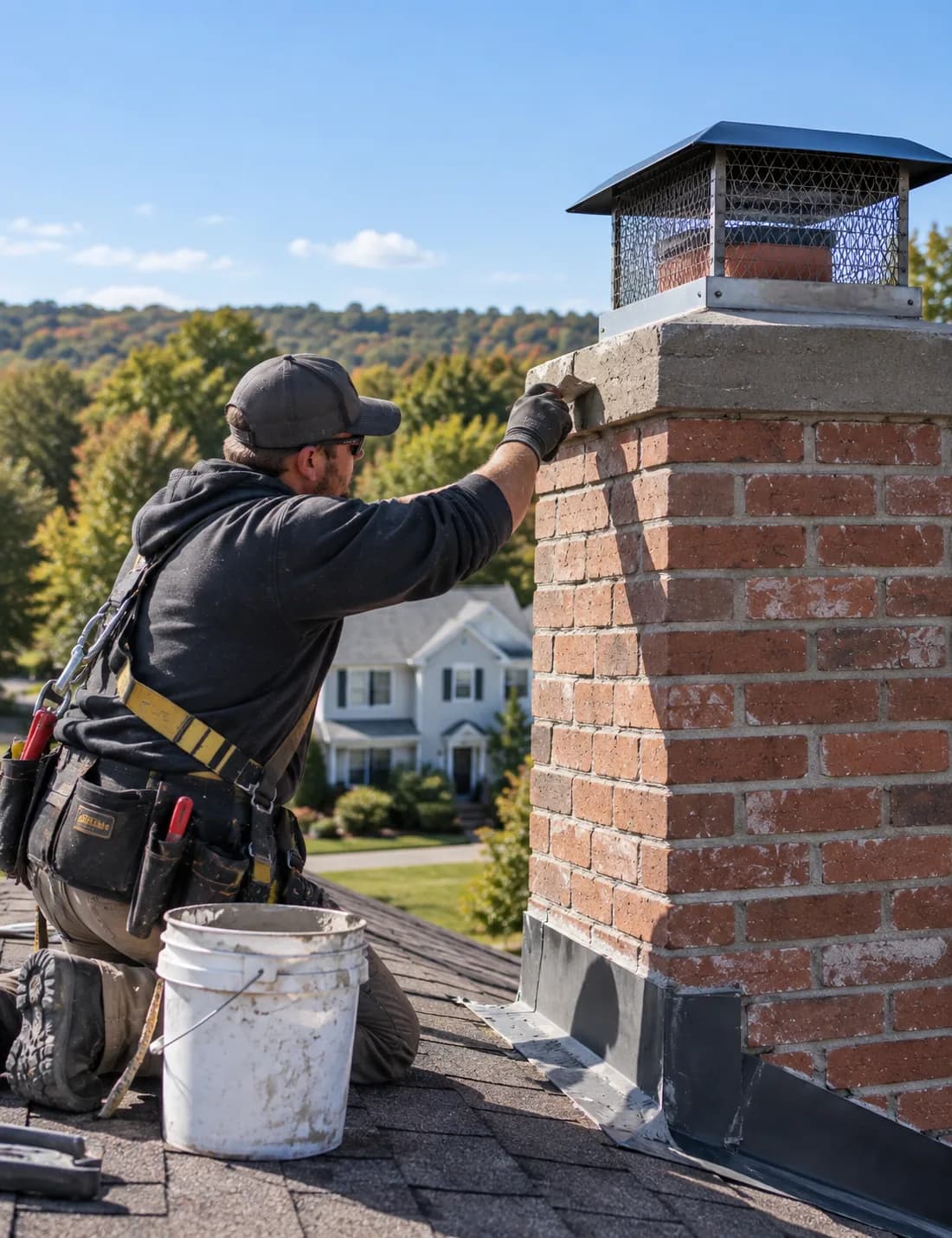
A sudden blockage is different. Nesting material, leaves, a fallen cap, or a piece of the liner or crown that has broken away can obstruct a flue quickly. Debris appearing in the firebox is a useful sign: something is getting in, or coming loose, at the top.
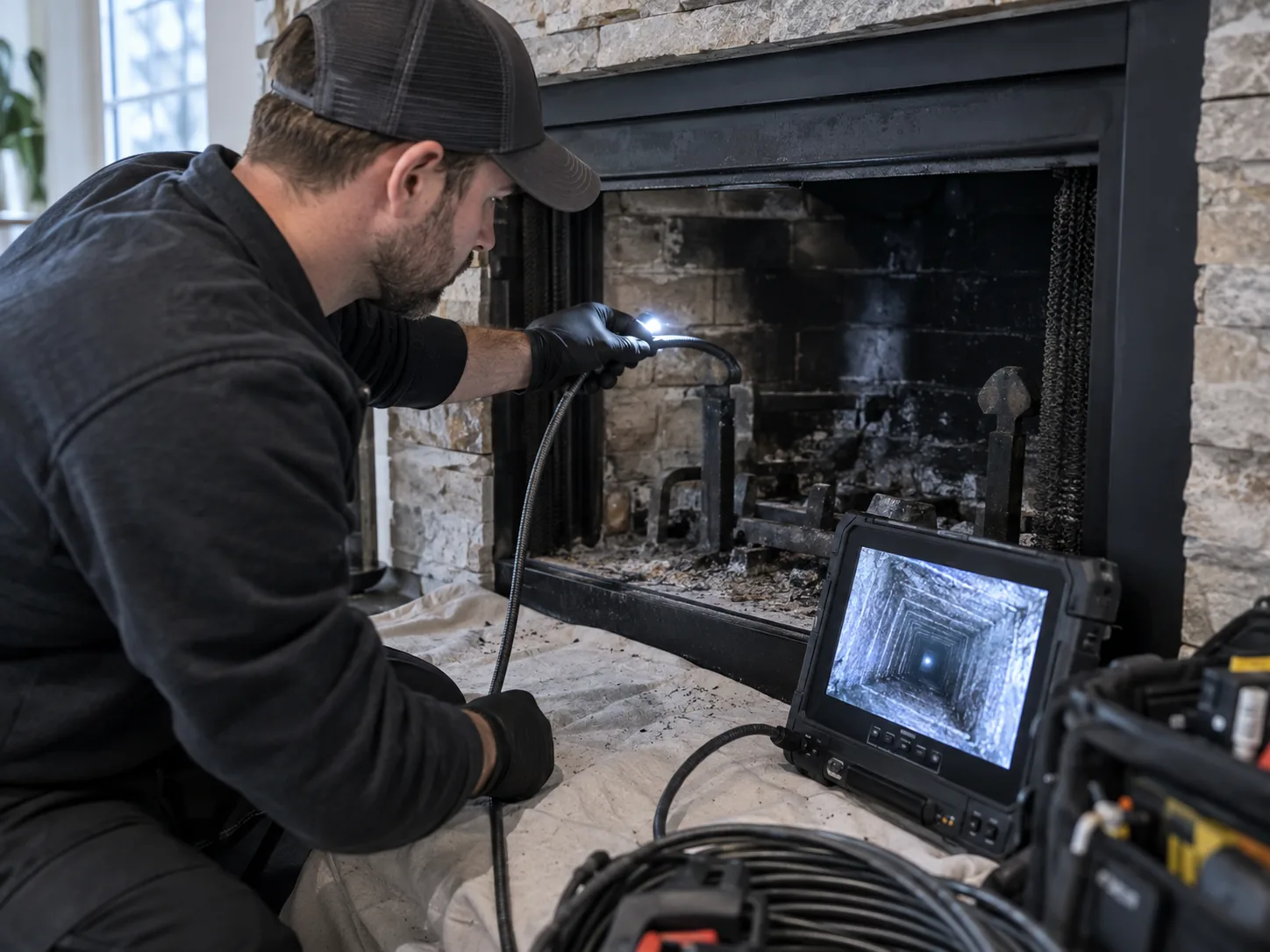
Where buildup or a blockage is the cause, a cleaning is usually what resolves it — and because the flue is bare once the deposits are gone, it is also when anything structural becomes visible.
When It Points to Something Structural
Some smoking problems are not about what is in the flue but about the chimney itself.
A cracked or gapped liner can let the draft leak into the chimney's own cavity instead of carrying smoke up. A damper that no longer seats or opens properly restricts the passage. A smoke chamber that was built badly, or has deteriorated, can disrupt the flow where the firebox narrows into the flue. A flue that is simply too large or too short for the fireplace may never have drawn well — in which case the fireplace probably always smoked a little, rather than starting recently.
These need someone to look. A smoking fireplace with no obvious cause, or one that has smoked since the day you moved in, is a case for an inspection rather than a cleaning.
If you are getting smoke in the room and a carbon monoxide alarm sounds, stop using the fireplace, get everyone out and call emergency services. Do not wait for an appointment.
Which Service Do You Actually Need?
A rough guide, with the caveat that a symptom can mislead and nothing here replaces a look up the flue.
If the fireplace has been used steadily and smokes gradually more than it used to, cleaning is the usual answer. If debris is falling into the firebox, or the problem started suddenly, something has likely blocked or broken and a cleaning will find out which. If it has never drawn properly, or smokes regardless of how the fire is built, an inspection to assess the flue, liner and smoke chamber is the more useful booking. If you can see cracked masonry, a damaged crown or a missing cap, the smoking is probably a symptom of that and the repair is the fix.
Frequently Asked Questions
Why is my fireplace suddenly smoking when it never did before?
A change that sudden usually means something changed in the chimney — a blockage, nesting material, a fallen cap, or storm damage. It can also be a damper that is no longer opening fully. It is worth having the flue looked at rather than burning through it.
Smoke comes in when I light the fire but clears after a few minutes. Is that a problem?
That pattern usually points at a cold flue rather than a fault: the chimney needs to warm before the draft establishes. It is common in flues on an exterior wall. If it is getting noticeably worse season to season, though, buildup may be narrowing the passage.
Will a chimney cleaning fix a smoking fireplace?
It will if buildup or a blockage is the cause, which is often the case. It will not fix a cracked liner, a failed damper or a badly built smoke chamber — but cleaning exposes the flue, so it is usually the point at which those are found.
Is a smoking fireplace dangerous?
Smoke entering the room means combustion gases are not leaving the way they should, and those gases include carbon monoxide, which has no smell. Treat it as a reason to stop using the fireplace until it has been looked at, and make sure you have a working carbon monoxide alarm.
It only smokes on windy days. What does that mean?
Wind can push down a flue or disturb the draft, and some chimneys are more exposed to it than others because of height, position or nearby roofline. It is worth mentioning when you book, because it points the inspection at the top of the chimney rather than the bottom.
Services That Address a Smoking Fireplace
Which one you need depends on what is causing it.
Chimney Cleaning
Clears creosote, soot and debris when buildup or a blockage is restricting the draft.
Chimney Inspection
Assesses the flue, liner, damper and smoke chamber when the cause is not obvious.
Chimney Repair
For damage that is causing the problem rather than resulting from it.
Chimney Damper Repair
When the damper no longer opens fully or seals properly.
Smoke Chamber Repair
Where the firebox narrows into the flue — a common cause of persistent smoking.
Poor Chimney Draft
The underlying problem behind most smoking fireplaces, in more detail.
Request a Free Estimate
Having Fireplace Smoke Problems?
Tell us when it smokes — on lighting, throughout the fire, or only in certain weather. That detail narrows it down before anyone arrives.
- Tell us the symptom, not the service
- No quote before someone has looked
- No obligation, no pressure
Describe the Problem
A few details is all we need to get started.