Connecticut
Chimney Inspection in Connecticut
Chimney inspection across Connecticut to establish what condition a chimney is in, rather than what has built up inside it. Request a free estimate.
What a Chimney Inspection Is For
A chimney is mostly hidden. You can see the stack from the garden and the firebox from the room, and almost everything between the two is out of sight — the flue, the liner, the smoke chamber, the joints, the crown from above. An inspection is the process of establishing what state those parts are in.
That makes it a decision tool rather than a maintenance job. People book one because they need an answer: is this safe to use, is this what is causing the leak, is this going to be a problem for the buyer, has the storm done damage.
The distinction from cleaning matters. Cleaning removes what has accumulated; inspection assesses condition. They overlap because a clean flue is far easier to assess, but if what you need is an answer rather than a clear flue, the inspection is the booking.
When an Inspection Is the Right Booking
Some moments genuinely call for a condition assessment rather than routine work. These are the common ones.
Buying or selling a house
A chimney is one of the few parts of a house a general survey tends to look at only from outside.
After a chimney fire
Even a small one can crack liner tiles and damage the structure in ways that are not visible from the room.
After a storm or lightning strike
Impact and wind damage concentrate at the top of the stack, where you cannot see it.
Before changing what the chimney vents
Fitting a stove or insert changes the flue's requirements, and the existing flue may not suit it.
A persistent problem with no obvious cause
A fireplace that smokes, smells or leaks without explanation needs someone to look rather than guess.
A flue going back into service
A chimney unused for years has still been weathering, and what is inside it is unknown.
What an Inspection Covers
The firebox and the damper first, because they are the accessible end and because a damper that no longer seats or opens properly explains a lot of complaints on its own.
Then the flue and the liner: whether the inner surface is intact, whether tiles are cracked or their joints open, whether there is anything obstructing the passage, and whether the flue is the right size for what it serves. Above that, the smoke chamber — the transition where the firebox narrows into the flue — which is a common source of persistent draft problems and is rarely looked at.
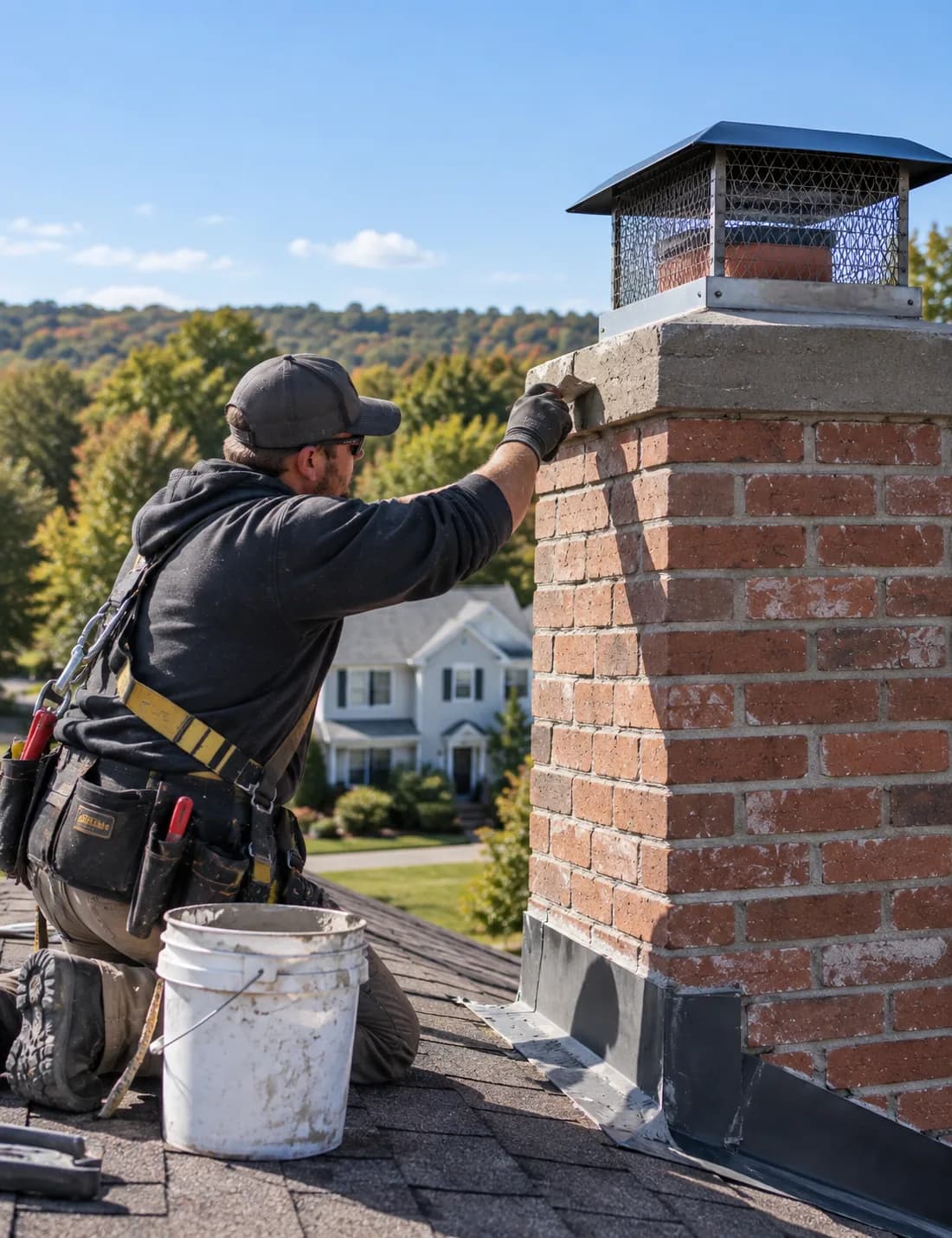
Outside, the stack itself: the condition of the brick and mortar, the crown across the top, the cap over the flue opening, and the flashing where the chimney meets the roof. Water gets in at those four points more often than anywhere else, so a leak investigation usually concentrates there.
What you should get at the end is a plain account of what was found, what it means, and what is worth doing about it — including the parts that can wait.
The trade defines inspection levels, and different levels call for different access and equipment. We describe what we look at rather than making a claim about a standard we have not documented here.
Inspecting a Chimney That Leaks
A chimney leak is the most common reason an inspection turns into a specific investigation, because the water almost never appears where it entered. Staining on a ceiling several feet from the stack, damp in an upstairs cupboard, or a smell after rain can all originate at the top of the chimney.
There are four usual entry points and they are worth knowing by name: the crown, which is the sloped slab across the top of the stack; the cap, which covers the flue opening itself; the flashing where the chimney passes through the roof; and the masonry, which absorbs water directly when the mortar joints have opened.
Establishing which one is doing it is the whole job. Sealing the wrong one is a common and expensive way to still have a leak.
Frequently Asked Questions
What is the difference between an inspection and a cleaning?
A cleaning removes what has built up inside the flue. An inspection establishes what condition the chimney is in. They are often done together, because a clean flue is much easier to assess, but they answer different questions.
We are buying a house. Is a chimney inspection worth it?
It is one of the better-value checks available, because a general survey usually looks at a chimney from the ground and the expensive problems are inside it. Liner condition in particular is invisible from outside and is one of the costlier things to put right.
There was a small chimney fire. Does it need inspecting?
Yes. Chimney fires reach temperatures that can crack clay liner tiles and damage the surrounding masonry, and the damage is not visible from the room. A flue in that condition should be assessed before the fireplace is used again.
How long does an inspection take?
Long enough to look properly at both ends and the structure between them. A single straightforward flue is quicker than a stack serving several fireplaces, and roof access changes it too — so it is worth saying up front how many flues the chimney has.
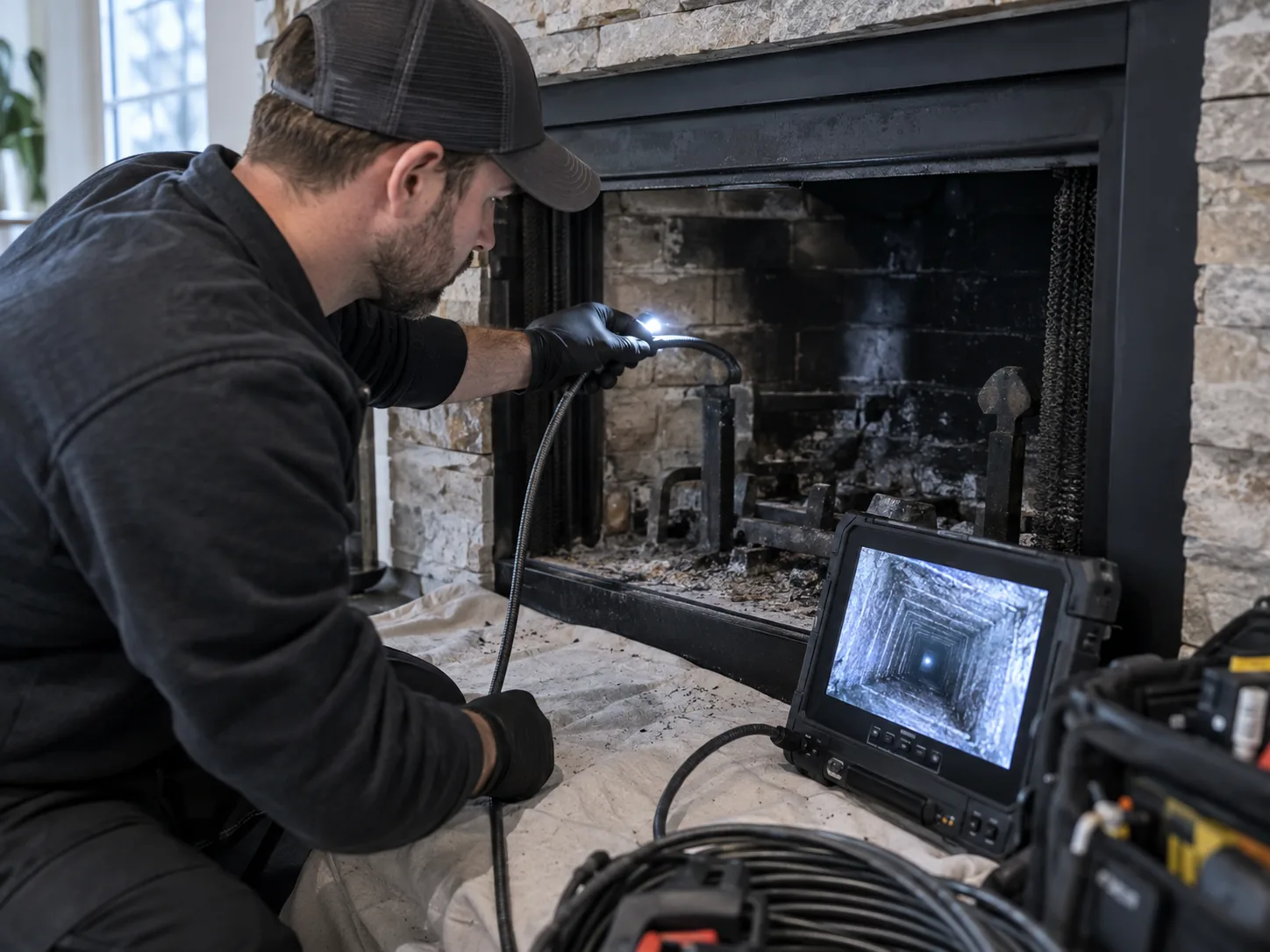
Do you use a camera inside the flue?
Camera scanning is a real technique, but we do not advertise equipment we have not confirmed we carry on every visit. Tell us what you need to establish and we will be straightforward about what we can and cannot assess.
The chimney has not been used in a long time. What should I book?
An inspection rather than a cleaning. A long-unused flue has still been weathering, may have taken in animals or debris, and its condition is genuinely unknown — which is the question an inspection answers.
What an Inspection Usually Leads To
Chimney Cleaning
Often booked alongside, because a clean flue is easier to assess.
Chimney Liner Repair
The most common significant finding, and the least visible.
Chimney Leak Repair
When the inspection was prompted by water.
Chimney Crown Repair
The slab across the top of the stack, and a frequent entry point.
Chimney Repair
Masonry and structural work on the stack.
Fireplace Inspection
When the concern is the firebox and hearth rather than the flue.
Chimney Cleaning & Inspection
Booking the pair together, and why the order matters.
Chimney Inspection by Town
Chimney Inspection has its own page in 46 Connecticut towns. These are the largest; every other town is covered too and listed on the service areas page.
- Stamford
- Bridgeport
- New Haven
- Hartford
- Waterbury
- Norwalk
- Danbury
- New Britain
- West Hartford
- Greenwich
- Fairfield
- Milford
- Stratford
- Hamden
- Bristol
- Meriden
- Manchester
- West Haven
- Cheshire
- Wallingford
- Southington
- Trumbull
- Glastonbury
- East Hartford
- Enfield
- Shelton
- Torrington
- Middletown
Request a Free Estimate
Need a Chimney Inspection?
Tell us why you need it — a purchase, a leak, a fire, or a flue going back into use. The reason changes what gets looked at most closely.
- Tell us the symptom, not the service
- No quote before someone has looked
- No obligation, no pressure
Request an Inspection
A few details is all we need to get started.