Connecticut
Fireplace Inspection in Connecticut
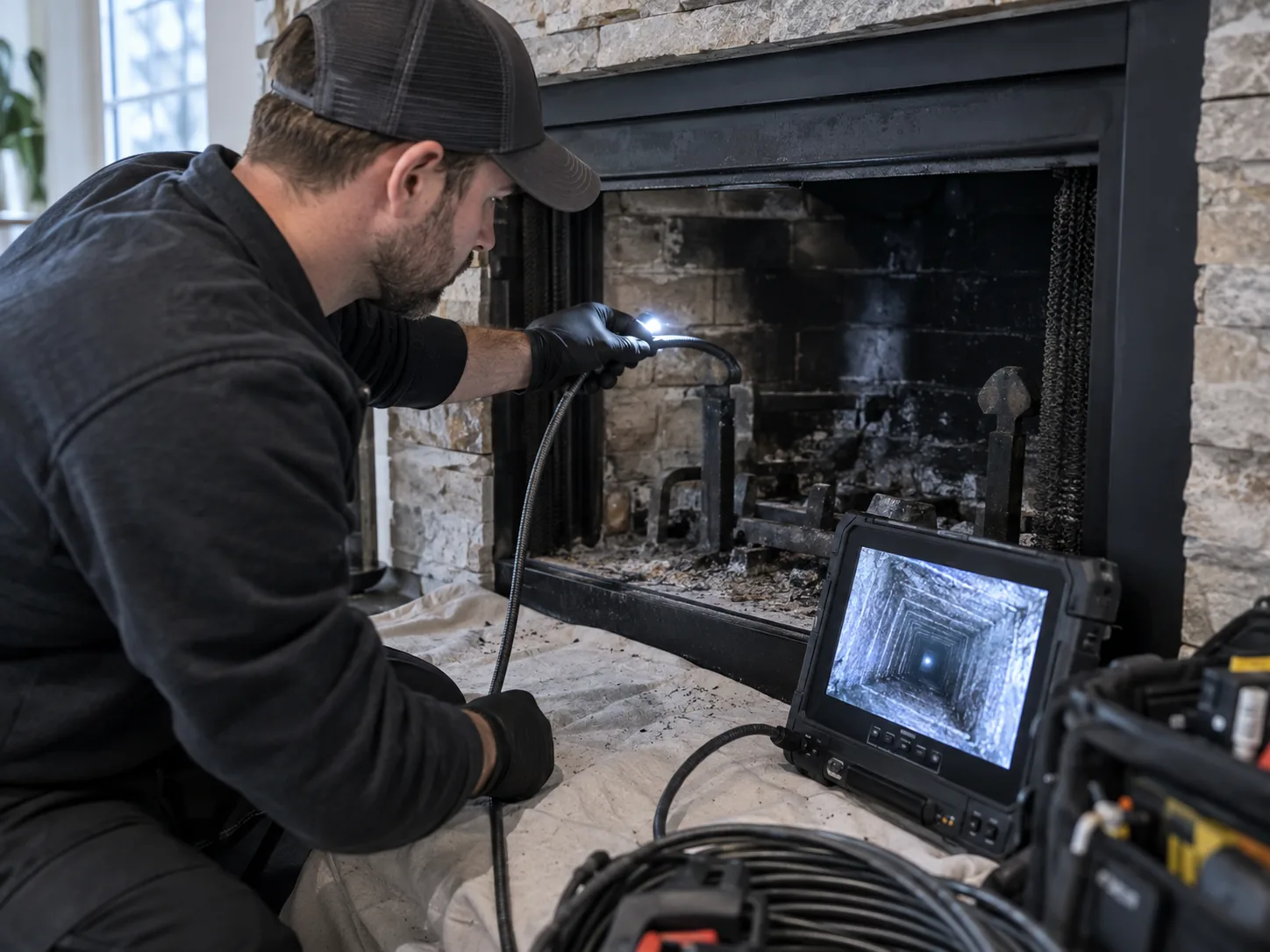
Fireplace inspection across Connecticut for the firebox, damper and hearth, to establish what is causing a problem. Request a free estimate.
What Gets Assessed
The firebox first. Firebrick cracks with heat and age, and the joints between the bricks erode; both matter because the firebox is what keeps the fire away from the structure around it. Deep cracks, missing brick or joints worn back to a noticeable depth are findings worth acting on.
Then the damper: whether it opens fully, closes properly and seats when it is shut. A damper that no longer does those three things explains a surprising number of complaints — smoke in the room, cold drafts in summer, and a fireplace that will not draw.
Then the hearth and surround — the extension in front of the opening, the clearances around it, and whether anything combustible sits closer than it should. And finally the throat and smoke chamber above, because the transition from firebox to flue is where a lot of persistent draft problems actually live.
A fireplace inspection is not a substitute for assessing the flue above it. Where the concern is smoke, smell or a leak, the chimney inspection is the more useful booking.
Frequently Asked Questions
How is this different from a chimney inspection?
This concentrates on the firebox, damper, hearth and surround — the parts in the room. A chimney inspection takes in the flue, liner and the stack outside. If the problem is smoke, smell or water, the chimney inspection is the one you want.
The firebrick is cracked. Is that serious?
It depends on depth and extent. Fine surface crazing is normal with heat. Cracks you can get a fingernail into, missing pieces or joints worn well back are a different matter, because the firebox is what separates the fire from the structure around it.
The damper is stuck. Will the inspection tell me why?
Usually. Dampers stick because of deposit buildup around the plate, because the frame has distorted with heat, or because the mechanism has corroded. Which one it is decides whether it is a clean, an adjustment or a replacement.
The fireplace is original to the house. Should we still use it?
Age on its own is not the question — condition is. An original firebox in sound order is perfectly usable; one with deep cracks, missing brick or a flue in poor condition above it is not, and that is what the inspection establishes.
Is the hearth in front of the fireplace big enough?
It is one of the things looked at. Hearth extension and the clearance to anything combustible around the opening are both worth checking on an older fireplace, and they are frequently the easiest thing to put right.
Related Work
Chimney Inspection
The flue, liner and stack above the fireplace.
Firebox Repair
Cracked firebrick and eroded joints.
Chimney Damper Repair
When the damper will not open, close or seat.
Fireplace Repair
The broader repair page for firebox, damper and hearth work.
Fireplace Cleaning
Often done first, because a clean firebox is far easier to assess.
Request a Free Estimate
Book a Fireplace Inspection
Tell us what the fireplace is doing, or what you need established, and we’ll follow up about scheduling.
- Tell us the symptom, not the service
- No quote before someone has looked
- No obligation, no pressure
Request a Fireplace Inspection
A few details is all we need to get started.