Connecticut
Fireplace Repair in Connecticut
Fireplace repair across Connecticut for firebox, damper and hearth faults. Tell us what the fireplace is doing and we will work out what it needs. Request a free estimate.
Three Different Machines With One Name
Almost every confusion about fireplace repair comes from the word covering three quite different things. A masonry fireplace is brick and firebrick built into the house, venting into a masonry flue. A manufactured or zero-clearance fireplace is a metal firebox in a framed chase, venting through a metal flue. A gas fireplace is an appliance with a burner, a valve, an ignition system and its own venting.
They fail differently, they are repaired differently, and the first useful thing you can tell us is which one you have. If you are not sure: a masonry firebox is brick or stone all the way through; a manufactured one has a metal surround and usually a refractory panel back; a gas one has a burner and either a pilot light or an electronic igniter.
What they share is that a fireplace problem and a chimney problem look identical from the sofa. Smoke, smell and poor draft usually originate above the firebox rather than in it.
What Usually Needs Repairing
The common faults, and which part of the fireplace each one points at.
Cracked or missing firebrick
The firebox is what keeps the fire off the structure. Deep cracks and missing pieces matter.
Eroded joints between firebricks
Mortar worn back to a noticeable depth, usually from heat and age.
A damper that will not open, close or seal
Behind a large share of smoke complaints and a constant source of heat loss.
Refractory panels cracked or crumbling
The manufactured-fireplace equivalent of firebrick failure.
A gas unit that will not light or stay lit
Pilot, thermocouple, igniter or valve — a different diagnosis entirely.
A hearth or surround that has cracked or lifted
Sometimes cosmetic, sometimes a clearance issue worth checking.
How a Repair Is Approached
By establishing what kind of fireplace it is and what has actually failed, which is not always what you can see. A fireplace that smokes may have a perfectly sound firebox and a problem in the flue above it; a fireplace that will not light may have nothing wrong with the appliance and a blocked vent.
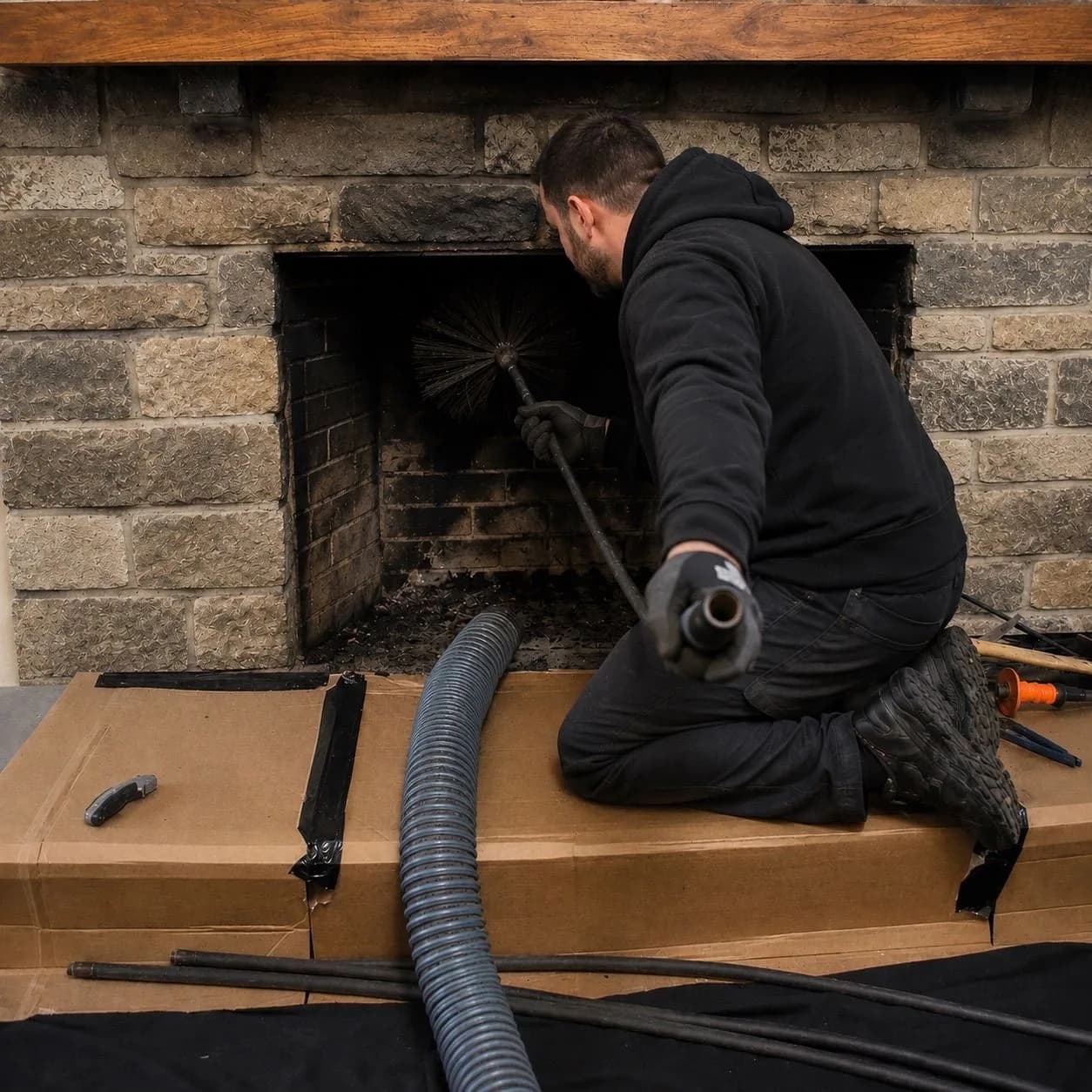
Firebox repairs are masonry work at small scale: cutting out and replacing failed firebrick, repointing eroded joints with refractory mortar, and resurfacing where it is needed. Refractory panels in a manufactured unit are replaced rather than repaired.
Damper work is mechanical — cleaning and freeing, replacing the plate or the mechanism, or fitting a top-sealing damper at the flue opening instead. Gas repairs are appliance diagnosis, on components rather than masonry.
If a carbon monoxide alarm has sounded, stop using the fireplace, get everyone out and call emergency services. That is not something to book an appointment about.
Frequently Asked Questions
How do I tell what kind of fireplace I have?
A masonry fireplace is brick or stone through the firebox. A manufactured one has a metal firebox, usually with refractory panels lining it, sitting in a framed chase. A gas fireplace has a burner and either a pilot light or an electronic igniter. It is the most useful thing to establish before anything else.
The firebrick is cracked. Can we still use it?
It depends on depth. Fine surface crazing is normal with heat. Cracks you can get a fingernail into, missing pieces, or joints worn well back are a different matter, because the firebox is what separates the fire from the structure around it.
It smokes. Is that a fireplace repair?
Often not — smoking is usually a draft problem, and draft problems usually live above the firebox: the damper, the smoke chamber, the flue or a blockage. It is worth describing the symptom rather than booking a specific repair.
What are refractory panels?
The molded heat-resistant panels lining a manufactured firebox, doing the job firebrick does in a masonry one. They crack and crumble with age and are replaced rather than repaired.
The fireplace is original to the house. Is it safe to use?
Age is not the question — condition is. An original firebox in sound order with a sound flue above it is perfectly usable. What decides it is an assessment of both, because one can be fine while the other is not.
Is it worth repairing or should we replace the whole thing?
For a masonry fireplace, repair almost always. For a manufactured unit it can genuinely go either way, because parts availability on older models is a real constraint — and we will tell you plainly if that is the situation.
Specific Fireplace Work
Firebox Repair
Cracked firebrick, eroded joints and refractory panels.
Gas Fireplace Repair
Pilot, ignition, valve and venting faults on gas units.
Wood Burning Fireplace Repair
Masonry and manufactured wood fireplaces.
Chimney Damper Repair
The plate above the firebox that opens and closes the flue.
Fireplace Inspection
A condition assessment when the cause is not obvious.
Fireplace Restoration
Bringing a disused firebox and hearth back into service.
Electric Fireplace Repair
For a unit with no flue — heater, fan, flame effect and controls.
Fireplace Repair by Town
Fireplace Repair has its own page in 45 Connecticut towns. These are the largest; every other town is covered too and listed on the service areas page.
- Stamford
- Bridgeport
- New Haven
- Hartford
- Waterbury
- Norwalk
- Danbury
- New Britain
- West Hartford
- Greenwich
- Fairfield
- Milford
- Stratford
- Hamden
- Bristol
- Meriden
- Manchester
- West Haven
- Cheshire
- Wallingford
- Southington
- Trumbull
- Glastonbury
- East Hartford
- Enfield
- Shelton
- Torrington
- Middletown
Request a Free Estimate
Fireplace Not Working Properly?
Tell us what kind of fireplace it is and what it is doing. Those two answers narrow it down more than anything else you could describe.
- Tell us the symptom, not the service
- No quote before someone has looked
- No obligation, no pressure
Ask About Fireplace Repair
A few details is all we need to get started.