Connecticut
Chimney Liner Repair in Connecticut
Chimney liner repair across Connecticut for cracked tiles and open joints in the surface that forms the flue. Request a free estimate.
What a Liner Is For
A chimney liner is the continuous surface that forms the inside of the flue — traditionally clay tiles stacked one on another inside the masonry, on modern work a stainless steel pipe. It does three things: it contains the combustion gases, it keeps the heat of them away from the surrounding masonry and the timber near it, and it gives the flue a smooth passage so the draft works.
When it fails, all three are affected. Gases can find their way into the masonry and, from there, into the structure. Heat reaches material it should not. And a gapped liner lets the draft leak sideways into the chimney cavity instead of pulling smoke up.
That is why liner condition is the single most consequential thing an inspection establishes, and it is invisible from the room.
How a Liner Tells You It Has Failed
Indirectly, in almost every case — which is why these signs are worth knowing.
Pieces of clay tile in the firebox
The most direct evidence there is. Tiles do not shed material unless they are breaking up.
A draft that has weakened over time
Gaps let the draft leak into the chimney cavity rather than carrying smoke up.
Smoke or smell in a room the fireplace is not in
Gases finding a route through a damaged liner into the structure.
Damp on the chimney breast with no external leak
Combustion moisture escaping into the masonry through open joints.
After a chimney fire
Flue fires reach temperatures that crack clay tile, and the damage is invisible from below.
White staining inside the firebox opening
Moisture moving through the masonry from inside the flue.
Repairing a Liner in Place
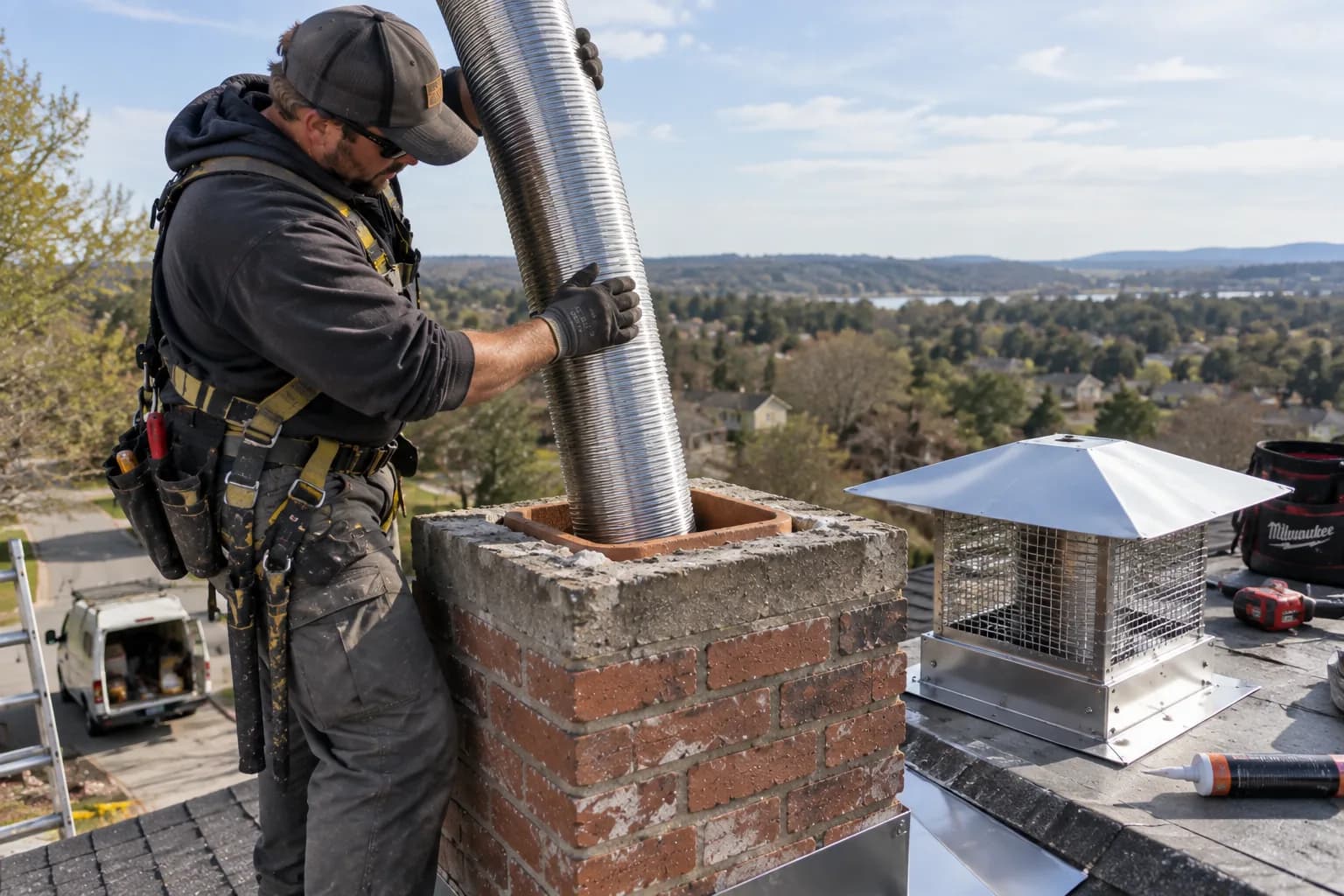
Where the damage is isolated and the rest of the liner is sound, repair in place is possible: sealing or resurfacing the affected joints so the flue is continuous again, without removing the existing tile work.
It is not always the right answer, and it is not always available. Extensive cracking, tiles that have broken up, or a liner that has separated over a length is a relining job — a new liner fitted inside the existing flue. So is a flue about to serve a different appliance, because sizing changes.
The assessment is the part that decides it, and it needs someone looking up the flue. A liner that is fine except for two open joints and a liner that is finished look similar from the firebox.
Where a flue is unlined altogether — common on older Connecticut chimneys — the question is not repair but whether it should be lined, and that depends on what it vents.
Frequently Asked Questions
What is a chimney liner?
The surface inside the flue — clay tiles on traditional masonry chimneys, stainless steel on modern work. It contains the combustion gases, keeps their heat off the surrounding structure, and gives the draft a smooth passage.
How do I know if the liner is damaged?
Usually indirectly: pieces of clay in the firebox, a draft that has weakened, damp on the chimney breast with no external leak, or smell in a room away from the fireplace. Confirming it means looking up the flue.
Can a liner be repaired, or does the flue need relining?
Isolated damage in an otherwise sound liner can often be sealed or resurfaced in place. Extensive cracking or a liner that has broken up means relining. The assessment decides, and the two look similar from below.
How serious is a cracked liner?
It is the most consequential common finding in a chimney, because the liner is what keeps combustion gases and heat where they belong. A flue with a damaged liner should be assessed before it is used again rather than burned through.
Our chimney has no liner at all.
Common on older Connecticut chimneys, and normal for when they were built. Whether it needs lining depends on what the flue serves and on the condition of the masonry — it is a genuine question rather than an automatic yes.
Related Flue Work
Chimney Liner Installation
Relining — a new liner fitted inside the existing flue.
Chimney Inspection
The assessment that establishes liner condition.
Signs of a Damaged Chimney Liner
The symptom page, in more detail.
Chimney Flue Repair
The same subject under the name most people search for.
Chimney Cleaning
A clean flue is the only flue anyone can properly assess.
Chimney Liner Repair by Town
Chimney Liner Repair has its own page in 29 Connecticut towns. These are the largest; every other town is covered too and listed on the service areas page.
- Stamford
- Bridgeport
- New Haven
- Hartford
- Waterbury
- Norwalk
- Danbury
- New Britain
- West Hartford
- Greenwich
- Fairfield
- Milford
- Stratford
- Hamden
- Bristol
- Meriden
- Manchester
- West Haven
- Cheshire
- Wallingford
- Southington
- Trumbull
- Glastonbury
- East Hartford
- Torrington
- Wethersfield
- Brookfield
- Darien
Request a Free Estimate
Concerned About a Liner?
Tell us what you have seen — debris in the firebox, a change in the draft, or a smell you cannot place — and whether there has ever been a chimney fire.
- Tell us the symptom, not the service
- No quote before someone has looked
- No obligation, no pressure
Ask About Liner Repair
A few details is all we need to get started.