
Connecticut
Chimney Liner Installation in Connecticut
Chimney liner installation across Connecticut — fitting a new liner inside an existing flue, also called relining. Request a free estimate.
When a Flue Needs Relining
Three situations account for nearly all of it. The existing clay liner has broken up beyond repair. The chimney was built without a liner, which is common on older Connecticut stacks, and is now going to vent something that needs one. Or the flue is being connected to a different appliance — a stove, an insert, a new heating appliance — and the existing flue is the wrong size for it.
That third case is the one people are least prepared for. A flue that worked perfectly well for an open fireplace can be substantially oversized for a stove or an insert, and an oversized flue lets the gases cool before they leave, which weakens the draft and deposits creosote faster. Relining to the correct diameter is part of fitting the appliance rather than an optional extra.
Relining, replacement and installation all describe this one decision, which is why one page covers all three names.
How Relining Works
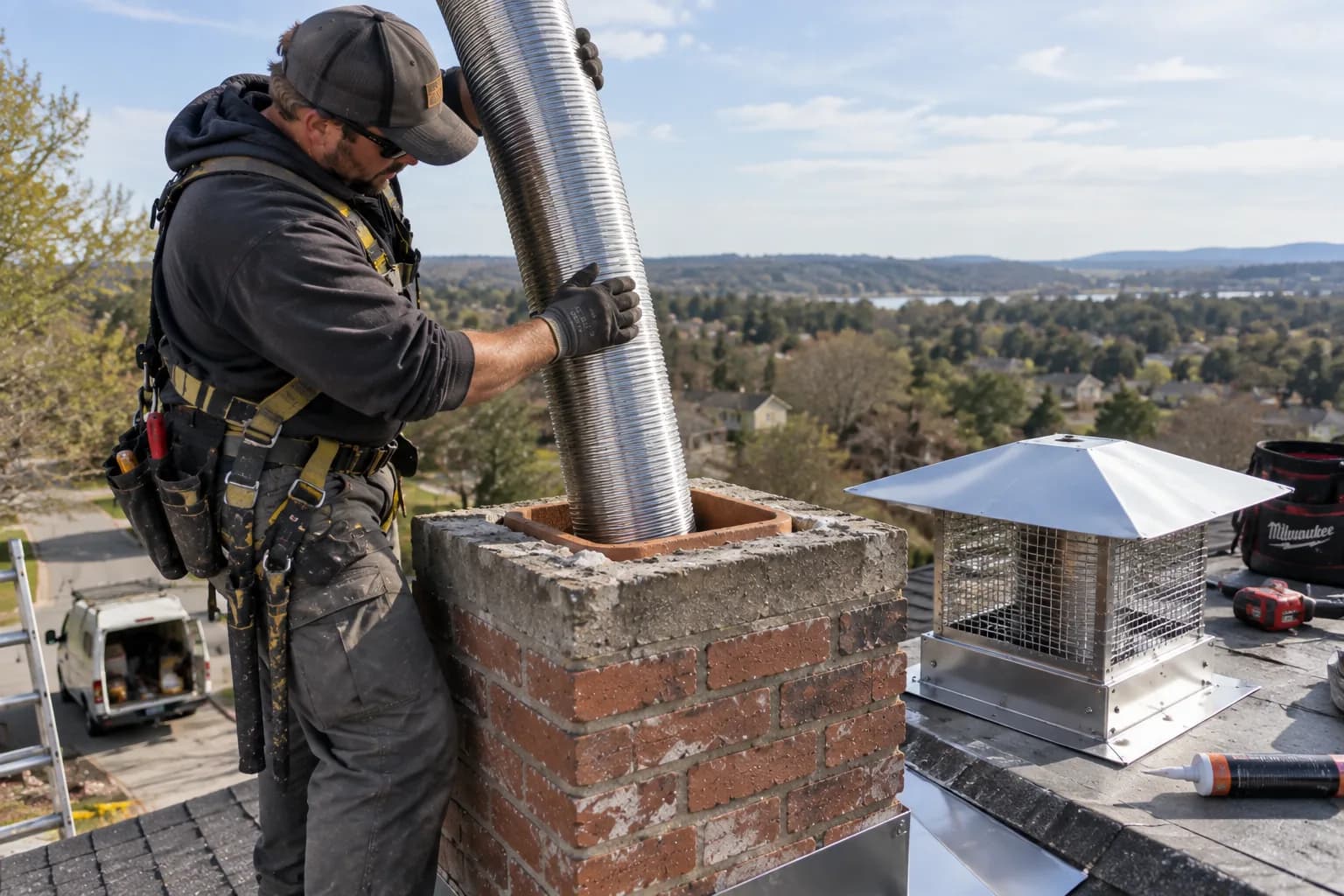
The usual method is a stainless steel liner run down the existing flue from the top, connected at the appliance or the firebox at the bottom and terminated at the crown with a top plate and a cap. Rigid and flexible liners both exist; which suits depends on whether the flue is straight and what offsets it has.
Insulation around the liner is often part of it. An insulated liner keeps the gases hotter on the way up, which improves the draft and slows creosote deposition — and in a cold exterior-wall chimney, that difference is substantial.
Sizing is the part that actually matters. The liner has to match what the appliance requires, not what the old flue happened to be. Getting that wrong produces a chimney that draws badly and fouls quickly, and it is not something that can be corrected afterwards without doing the job again.
Relining an unlined flue often means clearing and assessing the masonry first. What the inside of an unlined chimney looks like is not predictable from the room.
Frequently Asked Questions
What is the difference between relining and liner repair?
Repair seals or resurfaces damage in a liner that is otherwise sound. Relining fits a new liner inside the flue. Which applies depends on how extensive the damage is, and on whether the flue is the right size for what it now serves.
Why does the liner size matter?
Because an oversized flue lets combustion gases cool before they leave, which weakens the draft and deposits creosote faster. A flue that suited an open fireplace is often far too large for a stove or an insert, which is why relining comes with appliance fitting.
Does the liner need insulating?
Often it is worth it, particularly in a chimney on an exterior wall. Insulation keeps the gases hotter on the way up, which improves the draft and slows creosote build-up. It also matters for clearances in some installations.
Our chimney has never had a liner and has been fine.
Unlined flues are common on older Connecticut chimneys. Whether one needs lining depends on what it vents and what condition the masonry inside it is in — connecting a modern appliance to an unlined flue is a different proposition from an occasional open fire.
How long does relining take?
It depends on the flue: a straight run is considerably quicker than one with offsets, and an unlined chimney may need clearing and assessing first. It is generally a job of a day rather than a project.
Related Flue and Appliance Work
Chimney Liner Repair
Where the existing liner can be repaired instead.
Fireplace Insert Installation
The fitting that most often requires relining.
Wood Stove Installation
Same issue — flue sizing is part of the installation.
Chimney Inspection
What establishes whether relining is needed at all.
Chimney Flue Repair
The broader page on flue and liner problems.
Request a Free Estimate
Need a Chimney Relined?
Tell us what the flue serves now and what you want it to serve. Sizing follows from the appliance, so that is the most useful thing to start with.
- Tell us the symptom, not the service
- No quote before someone has looked
- No obligation, no pressure
Ask About Relining
A few details is all we need to get started.