
Connecticut
Fireplace Insert Installation in Connecticut
Fireplace insert installation across Connecticut — fitting a closed unit into an existing fireplace, with the liner it requires. Request a free estimate.
Why People Fit Inserts
An open fireplace is a poor heater. Most of the heat a fire produces goes up the chimney, and while the fire is burning the chimney is also pulling heated room air out of the house with it. On a cold night an open fireplace can cost more heat than it delivers.
An insert changes that. It is a closed, controllable firebox that fits into the existing opening, with the combustion sealed from the room and a blower moving room air around the hot firebox and back in. The same wood produces a great deal more useful heat.
It is a popular upgrade on Connecticut's older housing precisely because so many houses have a large masonry fireplace that is pleasant to look at and almost useless for heating.
What the Installation Requires
The unit is the easy part. These are the things that decide the project.
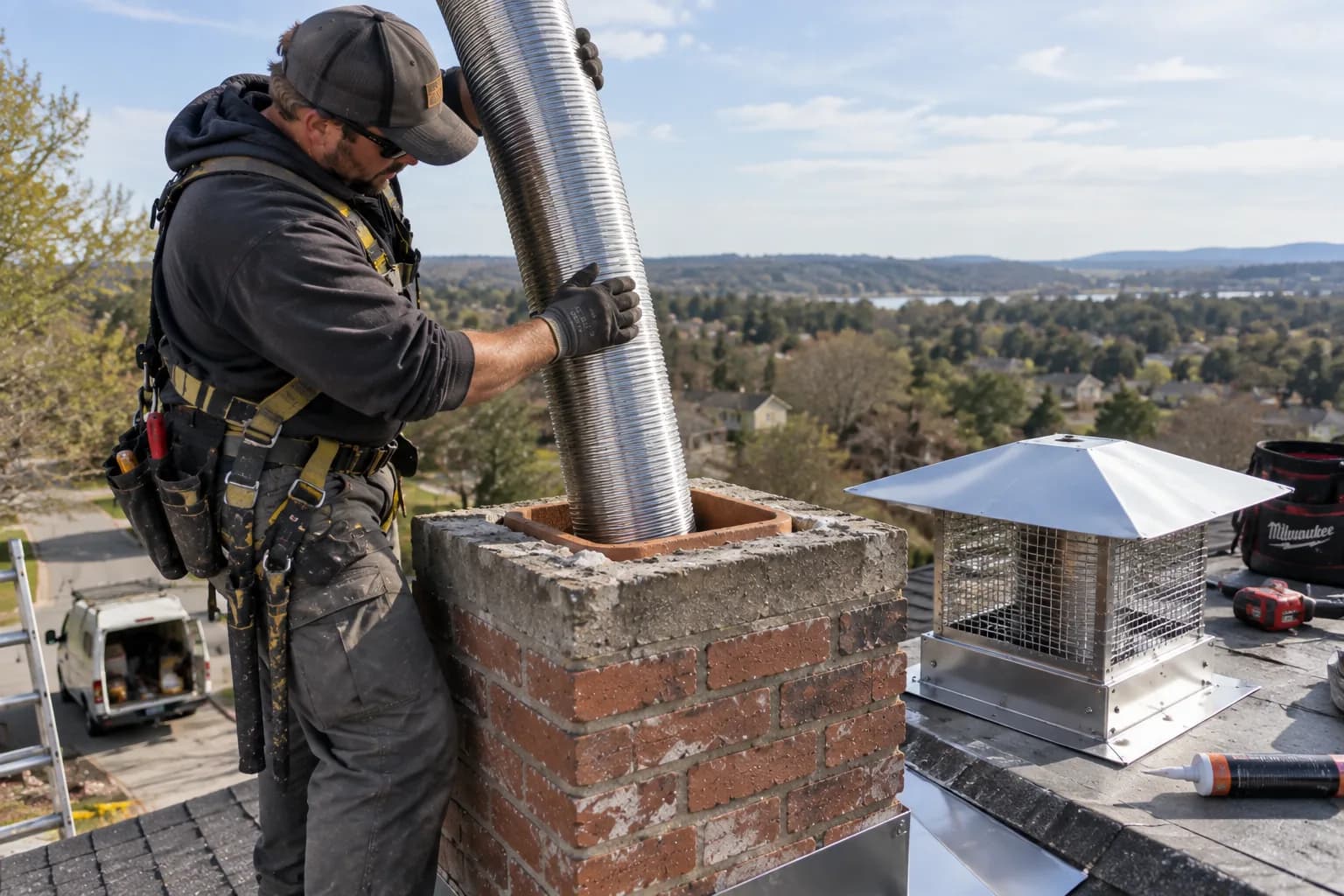
A full liner up the chimney
The single most important element, and the one most often skimped. Sized to the insert, not the flue.
A sound chimney to run it in
The liner goes inside the existing flue, so the masonry around it has to be in reasonable condition.
Opening dimensions
The insert has to fit the fireplace opening, including depth, which rules out models rather than adjusting them.
Hearth and clearances
An insert projects into the room and has its own clearance and hearth requirements.
Power for the blower
A supply at the fireplace, which older houses frequently do not have.
Access for future servicing
How the insert is fitted decides how hard it is to clean, every year, for as long as it is there.
How It Is Fitted
Assessment first: the chimney's condition, the opening's dimensions, and what liner size the chosen insert requires. An old fireplace flue is nearly always far larger than an insert needs, which is exactly why the liner matters.
Then the chimney is cleared and the liner run from the top down, insulated where the situation calls for it, and connected directly to the insert's outlet. That direct connection is the difference between an installation that vents properly and one that fills the fireplace cavity with combustion products.
Then the insert itself, positioned, connected, sealed at the surround, and with the blower wired. Then commissioning, and a straightforward explanation of how it will need to be serviced — because an insert that is awkward to access is an insert that gets cleaned less often than it should.
Installation work is subject to permitting and code requirements that vary by municipality. This site makes no claim about permits, certifications or sign-off; those are established for the specific job.
Frequently Asked Questions
Does an insert really need a full liner?
Yes, and it is the element most worth insisting on. Venting an insert into a large open masonry flue lets the gases cool, weakens the draft and deposits creosote quickly — and it leaves combustion products in the cavity around the unit rather than carrying them out.
How much difference does an insert make?
A substantial one, because it changes the appliance rather than improving the fire. An open fireplace loses most of its heat up the chimney and pulls heated room air out with it; a closed insert with a blower delivers heat into the room instead.
Wood or gas insert?
Wood gives more heat for less running cost and more work. Gas lights on demand and needs no fuel handling. The installation differs mainly in the venting: both need a liner, but a gas unit's is sized differently and may be a direct-vent arrangement.
Will an insert fit our fireplace?
Depth is the usual constraint rather than width. An insert has to sit within the opening, so measuring the opening — including how deep it is and whether the sides taper — decides which models are possible.
How much servicing does it need?
Treat it like a stove: a clearing each season if it is doing real heating work. How easy that is depends on how it was installed, which is worth raising before the installation rather than discovering afterwards.
Related Work
Chimney Liner Installation
The liner the insert needs, and why sizing matters.
Fireplace Insert Cleaning
What it will need every season once it is in.
Wood Stove Installation
The freestanding alternative, with its own trade-offs.
Gas Fireplace Installation
For a gas insert rather than a wood one.
Chimney Inspection
What establishes whether the chimney can take a liner.
Request a Free Estimate
Thinking About an Insert?
Measure the fireplace opening — width, height and depth — and tell us whether you are leaning towards wood or gas. That is enough to start the conversation properly.
- Tell us the symptom, not the service
- No quote before someone has looked
- No obligation, no pressure
Ask About Insert Installation
A few details is all we need to get started.