Connecticut
Wood Stove Installation in Connecticut
Wood stove installation across Connecticut — fitting a freestanding stove, with the flue sized and connected correctly. Request a free estimate.
The Flue Is the Installation
A stove is a box that you put in a room. Everything that determines whether it works is what happens between that box and the outside air: the diameter of the flue, its height, how the connector pipe runs, and how many bends are in it.
Diameter is the one most often got wrong, because the instinct is that bigger draws better. It does not. An oversized flue lets the gases cool before they leave, which weakens the draft and deposits creosote faster — which is why connecting a stove to an old fireplace chimney nearly always means relining to the stove's own size.
Height and route matter for the same reason. A tall, straight, warm flue draws strongly. A short one, or one with several bends, or one running up a cold exterior wall, draws less well, and that shows up as a stove that is hard to light and smokes when you open the door.
What Has to Be Settled
These are the constraints, and they are worth knowing before choosing a stove.
Flue diameter
Matched to the stove's outlet, not to the chimney that happens to be there.
Clearances to combustibles
Distance from walls, furniture and anything behind the stove. Heat shields change what is possible.
Hearth construction
Non-combustible, of adequate size and, for some stoves, of a specified thermal resistance.
Connector pipe route
As short and as straight as the position allows. Every bend costs draft.
Existing chimney condition
It can often be used, but it has to be sound and it usually has to be relined.
Combustion air
In a tight house a stove may need a dedicated supply rather than competing with extractors.
How an Installation Runs
Assessment of the position, the route and the existing chimney if there is one — including whether the flue is sound and what relining it to the stove's diameter involves.
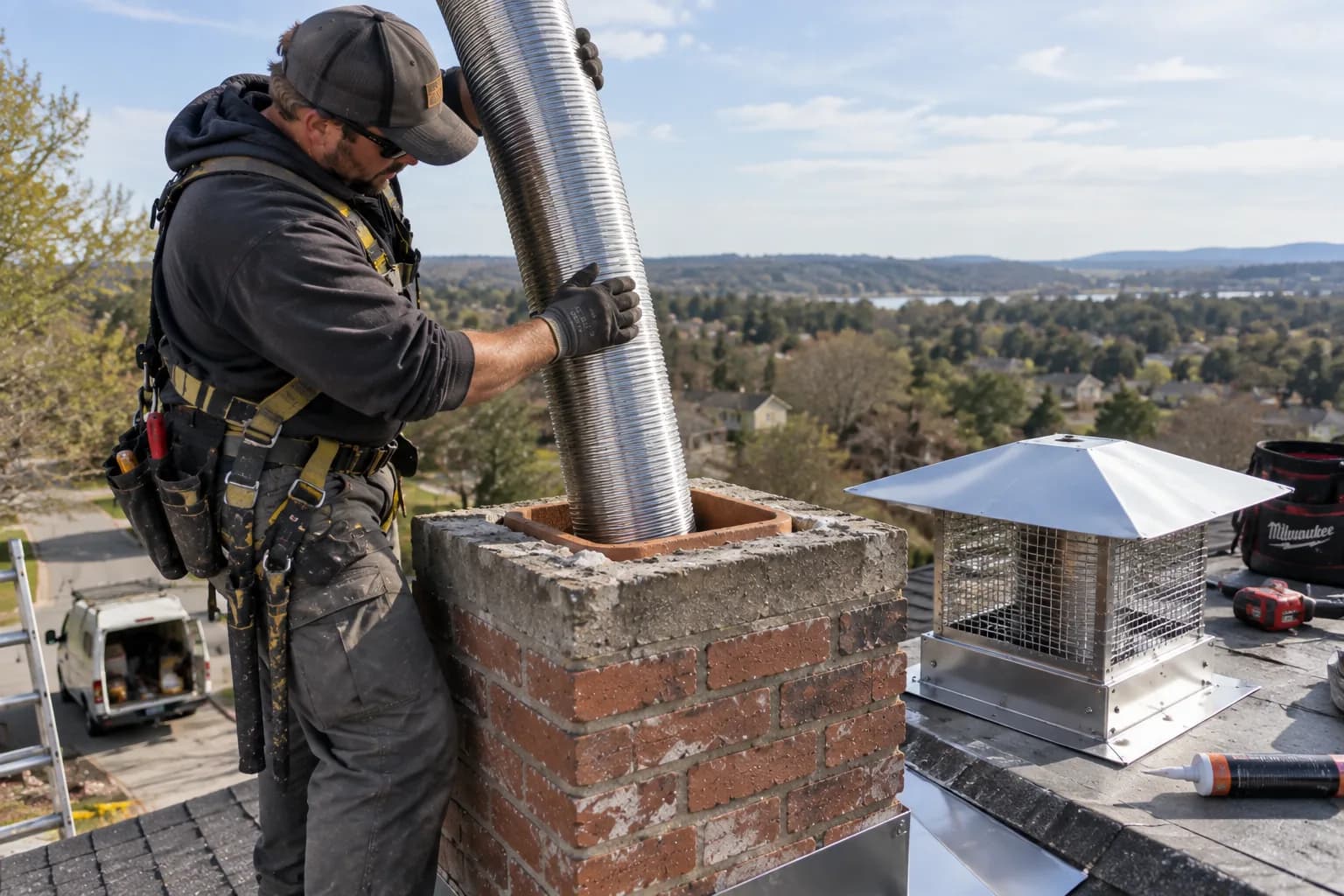
Then the hearth and clearances, then the flue: either a liner run down the existing chimney and connected at the stove, or a new twin-wall system through the structure and out. Every penetration has its own clearance requirement, and those are the details that make the difference between a good installation and a problematic one.
Then the stove itself, positioned and connected, with the connector pipe run as short and straight as the position allows. Then commissioning — lighting it, confirming it drafts properly and that nothing is smoking where it should not.
Installation work is subject to permitting and code requirements that vary by municipality. This site makes no claim about permits, certifications or sign-off; those are established for the specific job.
Frequently Asked Questions
Can a stove use our existing fireplace chimney?
Usually yes, and usually with a liner sized to the stove. An old fireplace flue is typically far larger than a stove needs, and connecting directly to it produces a stove that draws poorly and fouls quickly.
Would a bigger flue draw better?
No — the opposite. An oversized flue lets combustion gases cool before they leave, which weakens the draft and deposits creosote faster. Matching the stove's outlet size is what works.
How far from the wall does a stove have to be?
It depends on the stove and on whether heat shielding is used, and the manufacturer's figures govern. It is worth establishing before choosing a stove if the position is tight, because it can rule models out.
We have no chimney at all. Is it possible?
Usually, with a twin-wall flue system run up through the structure or externally. Route and termination height become the governing constraints, and they are worth settling before the stove is chosen.
How long does an installation take?
Connecting into a sound existing chimney with a liner is generally a day. A new twin-wall system through a structure is longer, and the hearth and any structural preparation come before either.
Related Work
Chimney Liner Installation
Nearly always part of connecting a stove to an existing chimney.
Wood Stove Cleaning
What the stove will need every season once it is in.
Wood Stove Repair
Gaskets, baffles and firebricks — the consumables.
Fireplace Insert Installation
The built-in alternative to a freestanding stove.
Chimney Inspection
What establishes whether the existing flue can be used.
Request a Free Estimate
Planning a Wood Stove?
Tell us where it would go, whether there is an existing chimney, and which stove you are considering if you have got that far. Flue sizing follows from the stove.
- Tell us the symptom, not the service
- No quote before someone has looked
- No obligation, no pressure
Ask About Wood Stove Installation
A few details is all we need to get started.