
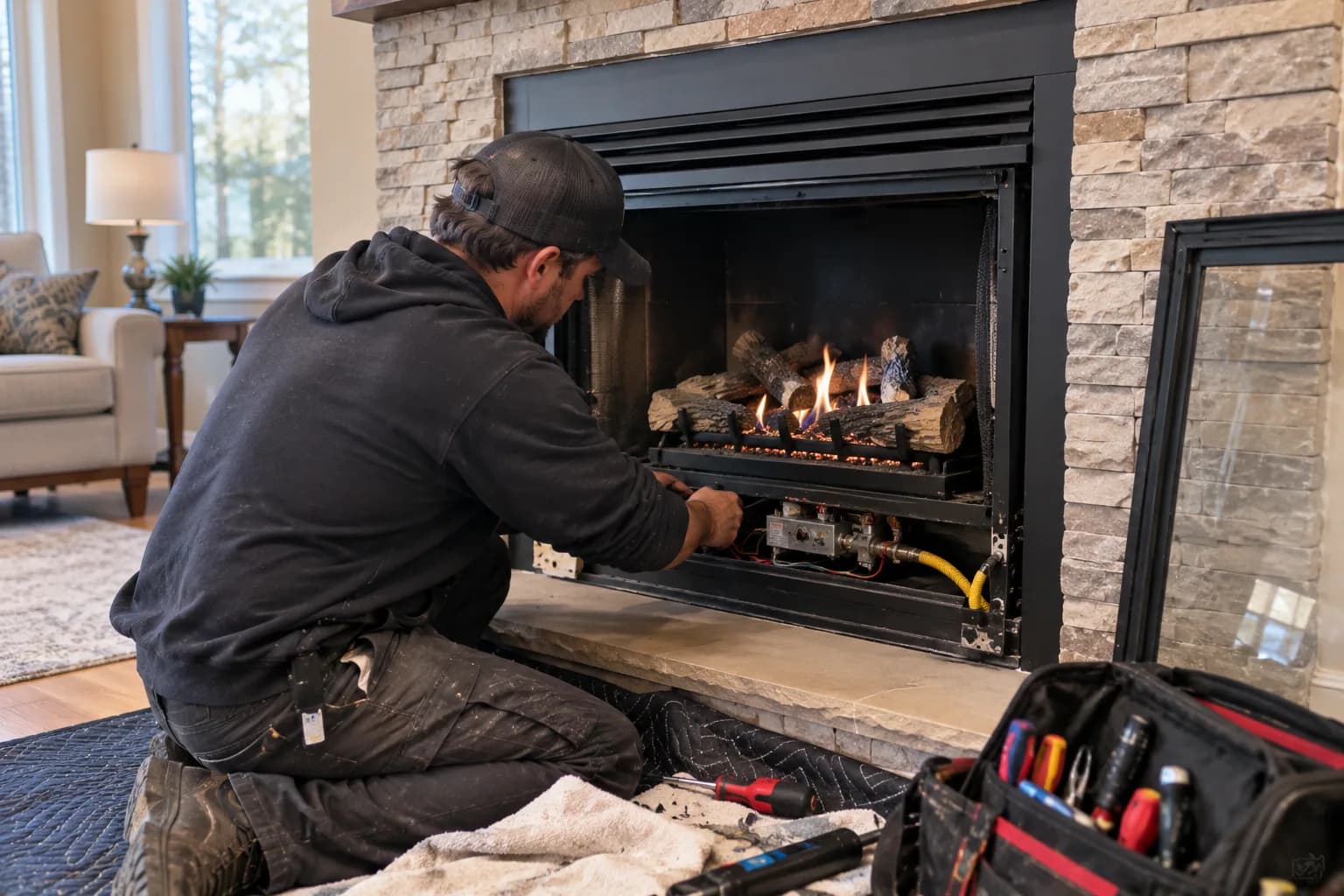
Connecticut
Fireplace Installation in Connecticut
Fireplace installation across Connecticut — fitting a new fireplace, including the venting it needs. Request a free estimate.
The Appliance Is Not the Hard Part
Choosing a fireplace is the part people spend time on. What actually determines whether the project is straightforward or substantial is where it will vent, because every fuel-burning fireplace has to get its combustion gases outside, and how it does that shapes everything else.
Into an existing chimney, the questions are whether the flue is sound, whether it is the right size for the appliance, and whether it needs relining. Into a new vent run, the questions are route, clearances and termination — where it exits and how far that has to be from anything else.
The other early question is fuel. Wood, gas and electric fireplaces have very different requirements, different venting, and very different installation work. Settling that first saves revisiting everything after it.
The Questions to Settle First
Answering these makes the rest of the project considerably more predictable.
What fuel?
Wood, gas or electric. It changes venting, clearances and the whole scope.
Is there an existing chimney?
Using one is usually simpler, but only if the flue is sound and correctly sized.
Where in the room?
Position decides the vent route, and the vent route decides much of the cost.
Open fire or a closed appliance?
An open fireplace and a closed stove or insert are different objects with different outputs.
What is the wall and floor construction?
Clearances and hearth requirements depend on what is behind and beneath.
Is this replacing something?
Replacing an existing fireplace is usually a very different project from creating a new one.
What the Installation Covers
Assessing the location and the venting route first, and being honest about what it allows. Some positions are straightforward; some require a vent run that makes a different position obviously better.
Then the preparation: the opening or the enclosure, the hearth and the clearances around it, and any structural work the position needs. Then the venting itself — a new flue system, or relining and connecting to an existing chimney.
Then the appliance, connected and commissioned, with the termination completed outside. And then the parts that are easy to leave off a plan and hard to leave out of a finished job: the surround, the finishing, and making good.
Installation work is subject to permitting and code requirements that vary by municipality. We do not make claims about permits, certifications or code sign-off on this site — those are established for the specific job rather than asserted in advance.
Frequently Asked Questions
Can we use the chimney we already have?
Often, and it is usually the simpler route. What decides it is whether the flue is sound and whether it is the right size for the appliance — a flue built for an open fireplace is frequently much too large for a modern closed unit, in which case relining is part of the job.
We have no chimney at all. Is it still possible?
Usually yes, with a new vent system rather than a masonry chimney. Route, clearances and where the vent terminates outside become the governing constraints, and they are worth establishing before choosing an appliance.
Wood or gas?
They suit different things. A wood fire is a different experience and a different amount of work; a gas unit is controllable and lights on demand. The practical difference for installation is venting, servicing and what the flue has to be.
Do we need a permit?
Requirements vary by municipality in Connecticut, so it is established for the specific job rather than assumed. We will tell you what applies rather than making a general claim about it.
How long does an installation take?
It depends almost entirely on the venting. Connecting into a sound existing flue is a short job; creating a new vent route through a structure is a considerably longer one.
Installation Options
Gas Fireplace Installation
Venting, connection and commissioning for a gas unit.
Wood Fireplace Installation
Building or fitting a wood-burning fireplace.
Fireplace Insert Installation
Fitting a closed unit into an existing fireplace opening.
Wood Stove Installation
A freestanding appliance rather than a built-in one.
Chimney Liner Installation
Nearly always part of connecting a new appliance to an old flue.
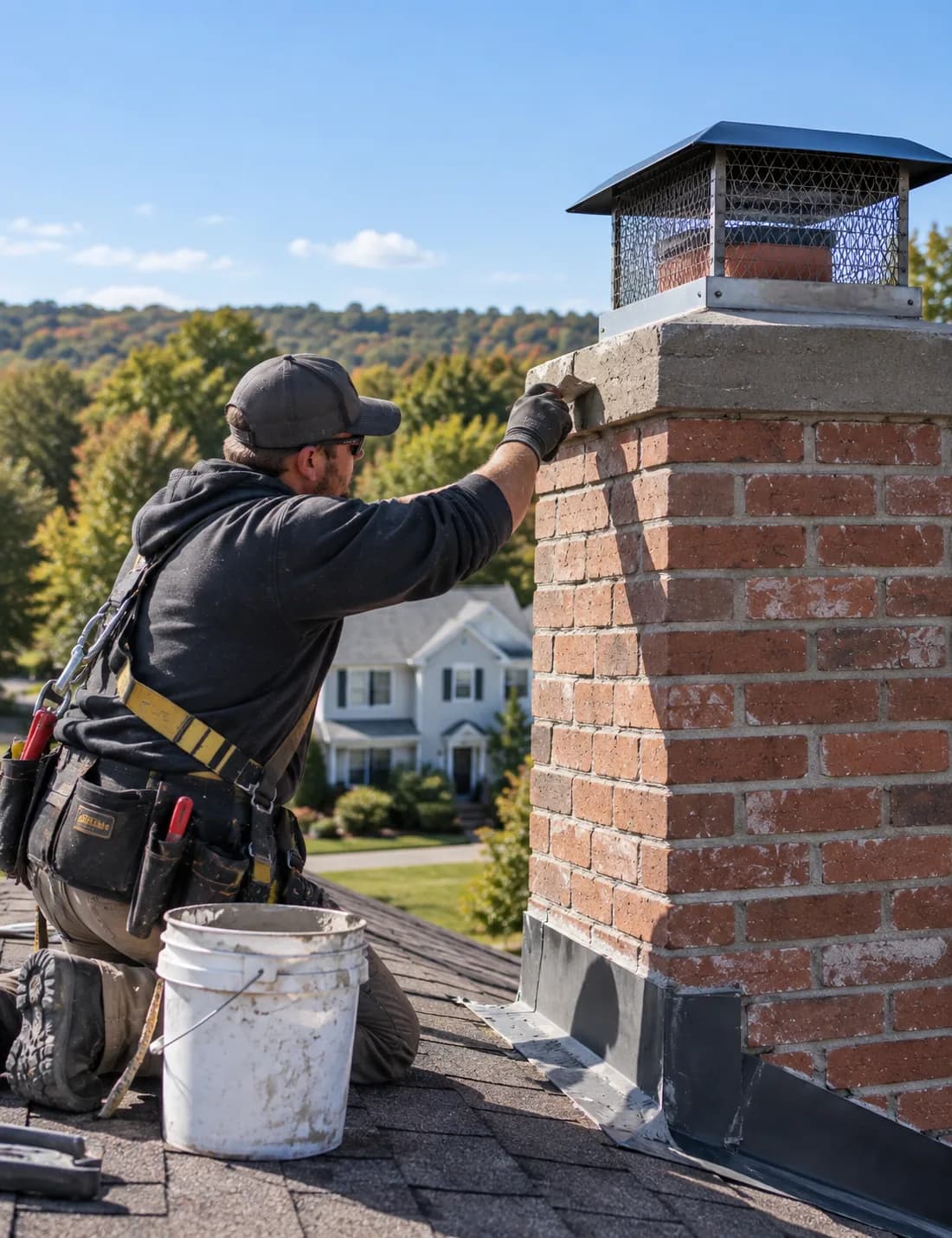
Request a Free Estimate
Planning a New Fireplace?
Tell us what fuel you are considering, whereabouts in the room it would go, and whether there is an existing chimney. Those three answers shape the whole project.
- Tell us the symptom, not the service
- No quote before someone has looked
- No obligation, no pressure
Ask About Fireplace Installation
A few details is all we need to get started.