
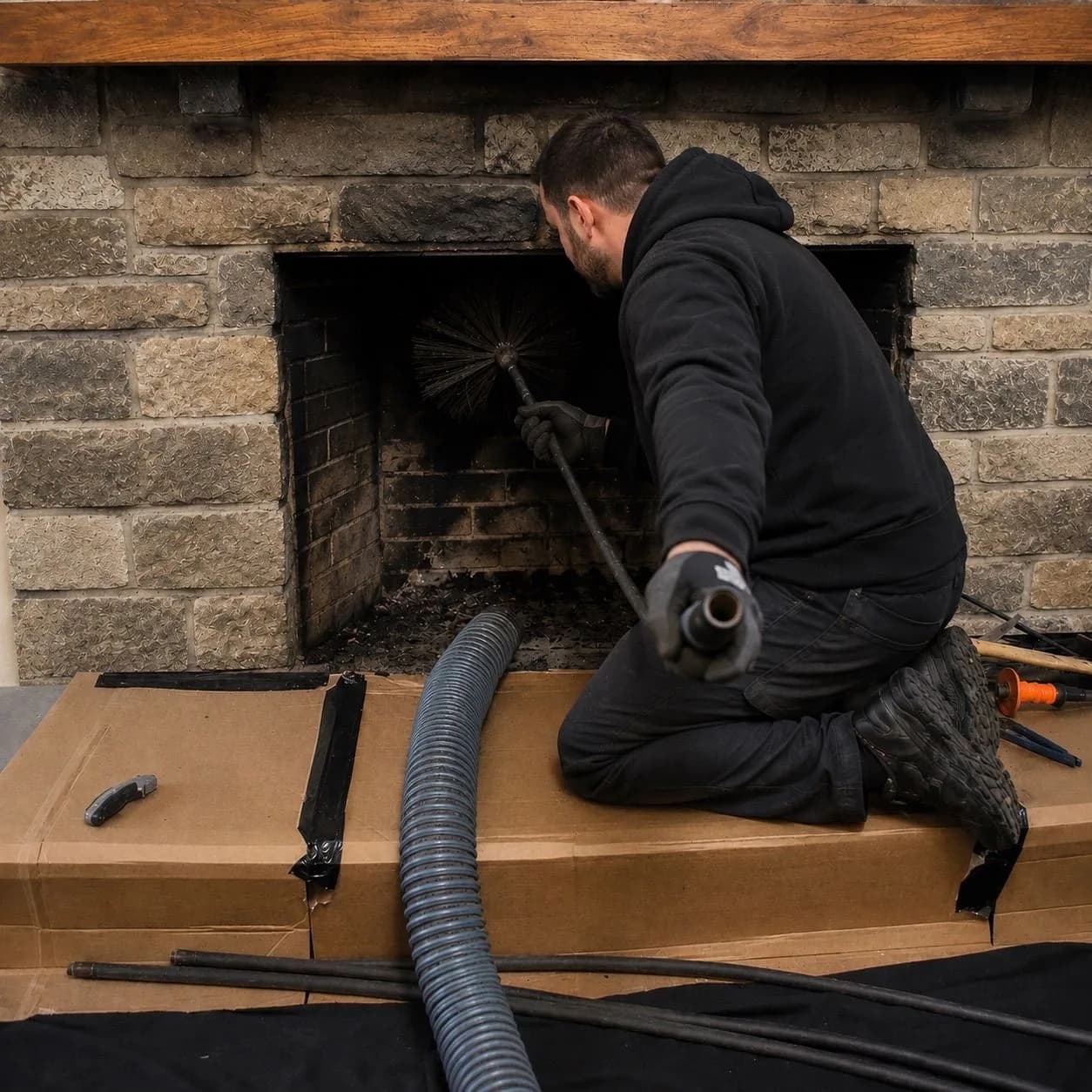
Connecticut
Wood Fireplace Installation in Connecticut
Wood burning fireplace installation across Connecticut — building or fitting a wood fireplace, and the flue it needs. Request a free estimate.
Masonry or Manufactured
Two quite different projects share this name. A masonry fireplace is built: a firebox of firebrick, a throat and smoke chamber above it, and a lined masonry flue carrying it out. A manufactured or zero-clearance fireplace is a factory-built metal unit installed into a framed enclosure, venting through an insulated metal flue system.
The masonry route is the traditional one and produces a fireplace that will outlive everyone involved. It is also substantially more work — it is masonry construction, with foundation implications if the fireplace is new rather than replacing an existing one.
The manufactured route is quicker, lighter and can go where masonry cannot, particularly on an upper floor or in a house with no existing chimney. What it gives up is longevity: a metal firebox has a service life, where a properly built masonry one effectively does not.
What Drives the Project
Wood is the most demanding fuel to install for, and these are the reasons.
Flue size and height
A wood fireplace needs a substantial flue, correctly proportioned to the firebox opening, and enough height to draw.
Clearances to combustibles
Wood burns hot, and what can be near the firebox and the flue is tightly constrained.
Hearth construction
The hearth has to be non-combustible and extend a proper distance in front of the opening.
Combustion air
A wood fire consumes a lot of air, and a tight modern house may need a dedicated supply.
Weight, on a masonry build
A masonry fireplace and chimney is a substantial structure with foundation requirements.
Where the flue terminates
Height above the roofline and distance from nearby structure both matter for draft.
How the Work Runs
Assessment and design first: what kind of fireplace, where, what the venting route is, and what the structure will take. On a masonry build this is genuinely a design stage rather than a formality, because firebox proportions and flue sizing determine whether the finished fireplace draws properly.
Then construction or installation. For masonry: the base, the firebox, the throat and smoke chamber, and the flue above. For manufactured: the enclosure, the unit, and the insulated flue system with its clearances maintained through every penetration.
Then termination and finishing — the chimney above the roof, the crown and cap on a masonry stack or the chase cover on a framed one, then the hearth, surround and making good inside.
Installation work is subject to permitting and code requirements that vary by municipality, and this site makes no claim about permits, certifications or sign-off. Those are established for the specific job.
Frequently Asked Questions
Masonry or manufactured — which should we choose?
Masonry lasts indefinitely and is a substantial build. Manufactured is quicker, lighter and can go where masonry cannot, at the cost of a finite service life. Where there is no existing chimney and no obvious place for a masonry stack, the choice often makes itself.
Can a new wood fireplace use an old flue?
Only if the flue is sound and correctly sized for it, and wood fireplaces are demanding on both counts. An assessment of the existing flue is the first step rather than an afterthought.
What decides whether a fireplace draws well?
Mostly proportions: the relationship between the firebox opening, the throat, the smoke chamber and the flue, and the height of the flue above the firebox. Those are design decisions made before anything is built, which is why the design stage matters.
What is combustion air and do we need it?
The air the fire consumes, which has to come from somewhere. In an older, drafty house it arrives on its own. In a tight, well-sealed one the fireplace can end up competing with extractors and the heating system, and a dedicated supply solves it.
How long does it take?
A manufactured fireplace with a straightforward vent route is a matter of days. A masonry fireplace and chimney built from new is a construction project and should be planned as one.
Related Installation Work
Fireplace Installation
The wider page across fuel types.
Chimney Liner Installation
Where an existing flue needs sizing to the new appliance.
Wood Stove Installation
A freestanding alternative with a simpler installation.
Fireplace Insert Installation
Converting an existing open fireplace rather than building new.
Chimney Inspection
What establishes whether an existing flue can be used.
Request a Free Estimate
Planning a Wood Fireplace?
Tell us whether there is an existing chimney, where in the house it would go, and whether you are thinking masonry or a manufactured unit.
- Tell us the symptom, not the service
- No quote before someone has looked
- No obligation, no pressure
Ask About Wood Fireplace Installation
A few details is all we need to get started.