Connecticut
Wood Stove Cleaning in Connecticut
Wood stove cleaning across Connecticut — the flue, connector pipe, baffle and firebox on a freestanding stove. Request a free estimate.
Why a Stove Is Not a Fireplace
A wood stove is a closed, controllable appliance. It is designed to run long and slow, extracting as much heat as possible before the gases leave — which is exactly what makes it efficient, and exactly what makes it deposit creosote.
The cooler the gases are when they reach the flue, the more readily they condense on its walls. So a stove burned on a low, slow setting through a Connecticut winter can accumulate deposits considerably faster than an open fireplace lit occasionally, despite burning less wood.
The other difference is the connector pipe — the single-wall or double-wall pipe running from the stove to the chimney. It is often horizontal or has elbows in it, it is where gases are coolest, and it is where deposits collect first. It is also the part a chimney-only cleaning can miss.
When a Stove Needs Clearing
Stoves signal more clearly than fireplaces, because you are closer to them.
A season of regular burning
The straightforward one. A stove doing real heating work earns a clearing every season.
Harder to get going, or will not hold a fire
Restricted draft from deposits in the pipe or the flue.
Smoke escaping at the door when it is opened
The draft is not strong enough to hold the smoke in.
Visible deposits in the connector pipe
Often accessible, and the clearest evidence available without tools.
A baffle that has warped, shifted or broken
Affects how gases travel through the stove and how hot they are when they leave.
Burning unseasoned wood
Changes the interval substantially, whatever the schedule said.
What the Visit Covers
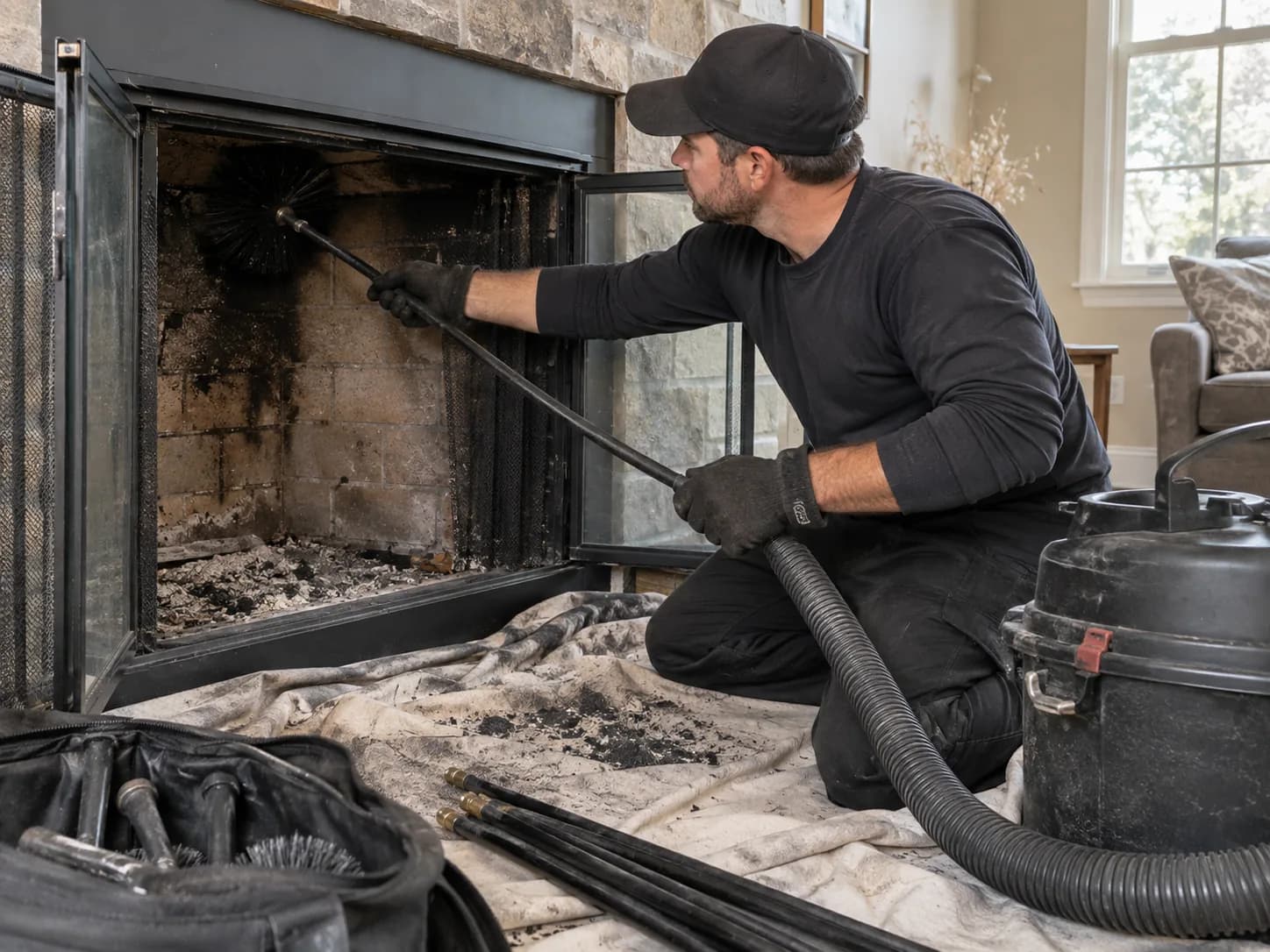
The flue, brushed to bare walls with rods and brushes sized to it, exactly as on any chimney. Then the connector pipe, which usually means disconnecting it, clearing it and refitting it properly — that is the part most likely to be skipped and most likely to be the problem.
Then the stove itself: the firebox, the baffle and the secondary air passages above it, where deposits interfere directly with how the stove burns. Baffles and firebricks get checked while access is there, because they are the components that fail.
And the door gasket and glass, which are worth checking at the same time. A stove with a perished gasket draws air where it should not, which changes how it burns and how fast it fouls.
Frequently Asked Questions
How often should a wood stove be cleaned?
A stove doing real heating work through a Connecticut winter generally earns a clearing each season — more often than an open fireplace, despite the stove being more efficient. Slow, cool burning deposits more creosote, not less.
Does the connector pipe need doing too?
It is often where the worst of it is. The pipe between stove and chimney runs cooler than the flue and frequently has horizontal sections and elbows where deposits collect. A cleaning that does not include it is not a complete one.
Does burning slowly cause more creosote?
Yes, and it surprises people. Long, low burns keep the flue gases cool, and cool gases condense on the flue walls. A hot, well-fed fire with dry wood deposits far less even though it burns more of it.
What is the baffle and why does it matter?
A plate inside the top of the firebox that makes gases travel further before they leave, extracting more heat. When it warps, cracks or shifts, the stove burns differently and the flue sees hotter or dirtier gases than it should.
How much difference does dry wood make?
More than the cleaning schedule does. Unseasoned wood spends energy boiling off its own moisture, burns cooler, and deposits creosote quickly. Two identical stoves burning different wood can need clearing at very different intervals.
Related Stove Work
Wood Stove Repair
Baffles, gaskets, glass and firebricks.
Chimney Cleaning
The same work on an open fireplace chimney.
Chimney Liner Repair
Stoves work a liner harder than an open fire does.
Wood Stove Installation
Where flue sizing is set, and it decides how the stove behaves.
Poor Chimney Draft
When a stove will not draw and the flue is clear.
Request a Free Estimate
Wood Stove Needing Clearing?
Tell us how much you burn, what wood you use, and whether the connector pipe has elbows or a horizontal run. That shapes what the visit needs to cover.
- Tell us the symptom, not the service
- No quote before someone has looked
- No obligation, no pressure
Request Wood Stove Cleaning
A few details is all we need to get started.