Chimney & Fireplace Problems
Animal or Bird in the Chimney
An open flue is a sheltered vertical cavity, which is exactly what a lot of wildlife is looking for. Here is what is usually happening and what the sensible next step is.
Why Chimneys Attract Animals
From outside, an uncapped flue looks like a hollow tree: vertical, sheltered, warm relative to the outside air, and inaccessible to most predators. Birds nest in them, squirrels use them as routes and as dens, and raccoons find the smoke shelf a usable ledge.
Sometimes the animal is there deliberately and sometimes it has fallen in and cannot get out — smooth flue liner is very difficult to climb. The difference matters for urgency: an established nest is a problem to solve; a trapped animal is a problem to solve quickly.
Either way, the chimney is not going to stop being attractive on its own. A flue that has hosted one nest will host another.
How You Usually Find Out
Rarely by seeing anything. These are the ways it normally announces itself.
Scratching, scrabbling or fluttering sounds
Particularly at dawn and dusk, and particularly from behind the damper.
Chirping from inside the chimney
Nestlings. This tells you the nest is established rather than being built.
Nesting material in the firebox
Twigs, leaves and grass coming down are the clearest physical sign.
A sudden smoking problem
A nest can obstruct a flue almost completely, and a fireplace that drew fine last winter now will not.
A strong organic smell
Unmistakable, and usually the way a dead animal is discovered.
Flies or insects around the fireplace
Frequently the first sign of something that has died in the flue.
What to Do, and What Not To
Do not light a fire. It is the most common instinct and it is the wrong one — it is inhumane if the animal is alive, it does not remove a nest, and smoke pushed into a blocked flue comes back into the room.
Do not reach up past the damper. A frightened animal in a confined space is a bite and scratch risk, and the damper area is exactly where one will be.
Do close the damper if it is open and the animal is above it, and keep the room shut, so nothing finds its way into the house while you work out the next step. Then get it looked at rather than waiting for it to resolve itself.
Connecticut regulates nuisance wildlife work, and live removal, trapping and relocation are not offered here. What these pages cover is the chimney itself: assessing and clearing the flue, dealing with debris and damage, and closing off the route in.
The Chimney Side of the Problem
Once the flue is clear, there are three things worth doing and they are all chimney work. Clearing the nesting material and debris properly, because what is left behind is combustible and often substantial. Assessing what the occupancy did — nesting material packed against a liner, and the mess that comes with an established nest, can both cause damage.
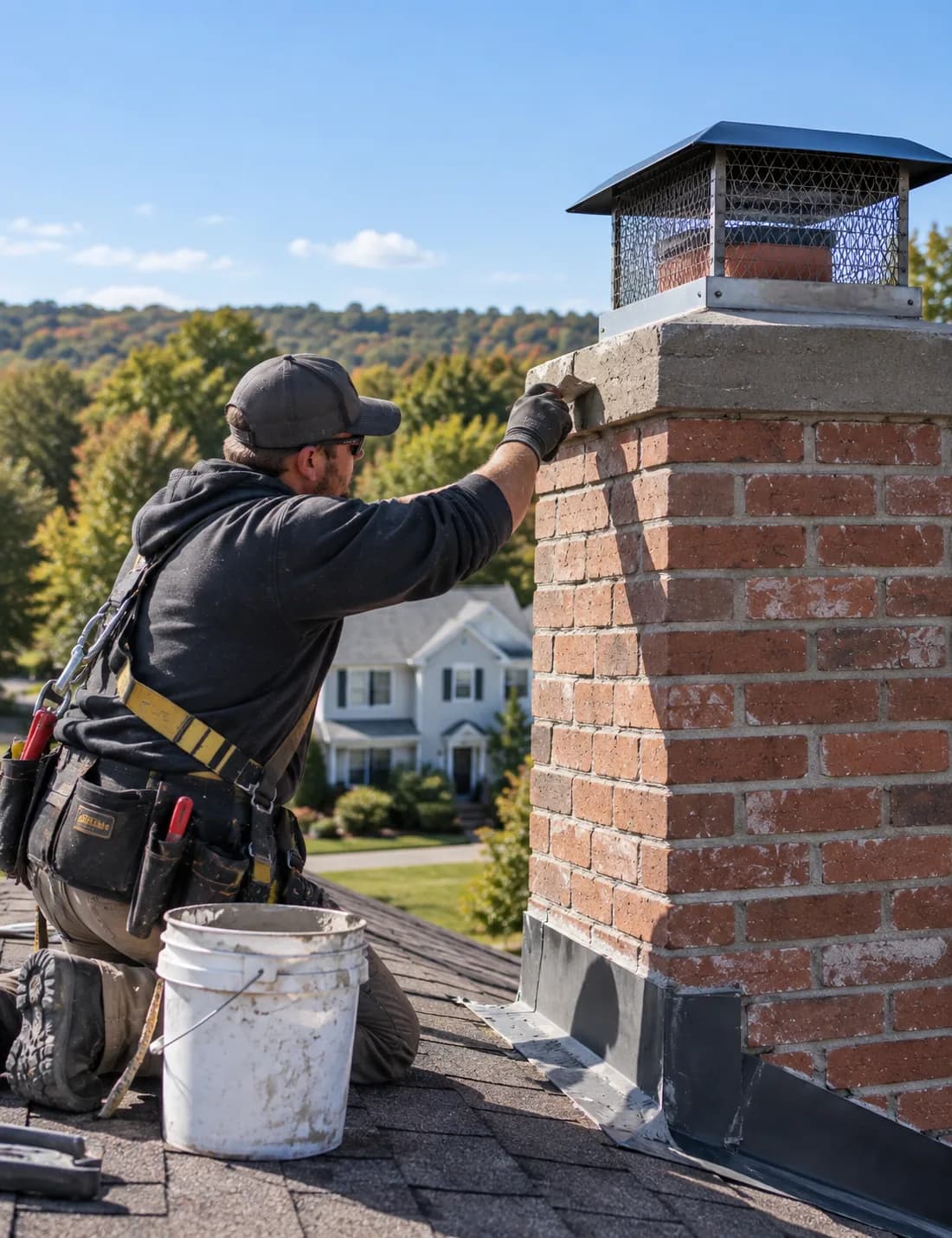
And closing the route. A cap with the correct mesh keeps birds, squirrels and raccoons out, and it is a straightforward job that prevents the whole sequence repeating. It is also the point most often skipped: a flue gets cleared, nothing gets capped, and the same call comes in the following spring.
Mesh specification matters here. Too coarse and it stops nothing; too fine and it clogs with creosote and restricts the draft.
Frequently Asked Questions
Can I smoke it out?
No — and it is worth saying plainly. It is inhumane if the animal is alive, it does not remove nesting material, and a blocked flue pushes the smoke straight back into the room. It also tends to turn a solvable situation into a worse one.
Will it leave on its own?
A bird that has fallen in usually cannot — flue liner is too smooth to climb. An established nest is not going anywhere until the season ends, and the material stays afterwards regardless.
Do you remove animals from chimneys?
Nuisance wildlife work is regulated in Connecticut and we do not advertise live removal, trapping or relocation. What we do is the chimney side: assessing and clearing the flue, dealing with debris and damage, and fitting a cap so it does not happen again.
How do I stop it happening again?
A cap with the correct mesh, fitted after the flue has been cleared and checked. It is the single most effective preventive measure there is, and it is one of the least involved jobs in this trade.
Can you just cap it now?
Not with anything still in the flue — capping seals the problem inside, which makes it considerably worse. The flue is cleared and checked first, then capped.
The Chimney Work This Involves
Chimney Cap Installation
Mesh that keeps birds and animals out — fitted after the flue is cleared.
Chimney Cleaning
Clearing nesting material and debris from the flue and smoke shelf.
Chimney Inspection
Assessing what the occupancy did to the liner and the flue.
Blocked Chimney
What a nest does to the draft, and the other things that obstruct a flue.
Chimney or Fireplace Smells
Often how this is discovered in the first place.
Request a Free Estimate
Something in Your Chimney?
Tell us what you are hearing or smelling and whether the fireplace is in use. Do not light it in the meantime.
- Tell us the symptom, not the service
- No quote before someone has looked
- No obligation, no pressure
Describe the Problem
A few details is all we need to get started.