Connecticut
Chimney Cap Installation in Connecticut
Chimney cap installation across Connecticut — a cover over the flue opening that keeps out rain, debris, animals and embers. Request a free estimate.
What a Chimney Cap Does
A cap sits over the flue opening at the top of the stack, held clear of it so smoke can still leave. Four things follow from that. Rain stops falling directly down the flue. Leaves, twigs and wind-blown debris stop collecting in it. Birds and animals cannot get in to nest. And the mesh that keeps them out also stops embers leaving the top of an active flue.
That last function is what a spark arrestor is, and on nearly every residential chimney the arrestor, the animal screen and the cap are one component — the same mesh doing all three jobs. They are sold and searched under different names, which is why they are covered here rather than on three separate pages.
An uncapped flue is the origin of a surprising proportion of the problems on the rest of this site: water in the firebox, blockages, nesting material, animals, and moisture working on the masonry from the inside.
When a Cap Is Needed
Most of these are visible from the ground, or obvious from inside.
No cap at all
Common on older chimneys, which were often built before caps were standard.
Rust, corrosion or a damaged mesh
Galvanised caps have a finite life outdoors; once the mesh has gone, the cap has stopped doing three of its four jobs.
A cap that has lifted or blown off
High wind takes poorly fitted caps off. If yours went, the fixing rather than the cap is often the issue.
Rain or damp appearing in the firebox
Water is coming straight down the flue, which is the one problem a cap solves outright.
Birds, squirrels or nesting material
An open flue is a sheltered vertical cavity, which is exactly what a lot of wildlife is looking for.
Debris turning up in the firebox
Leaves and twigs collecting at the top eventually come down.
Fitting, Repairing or Replacing
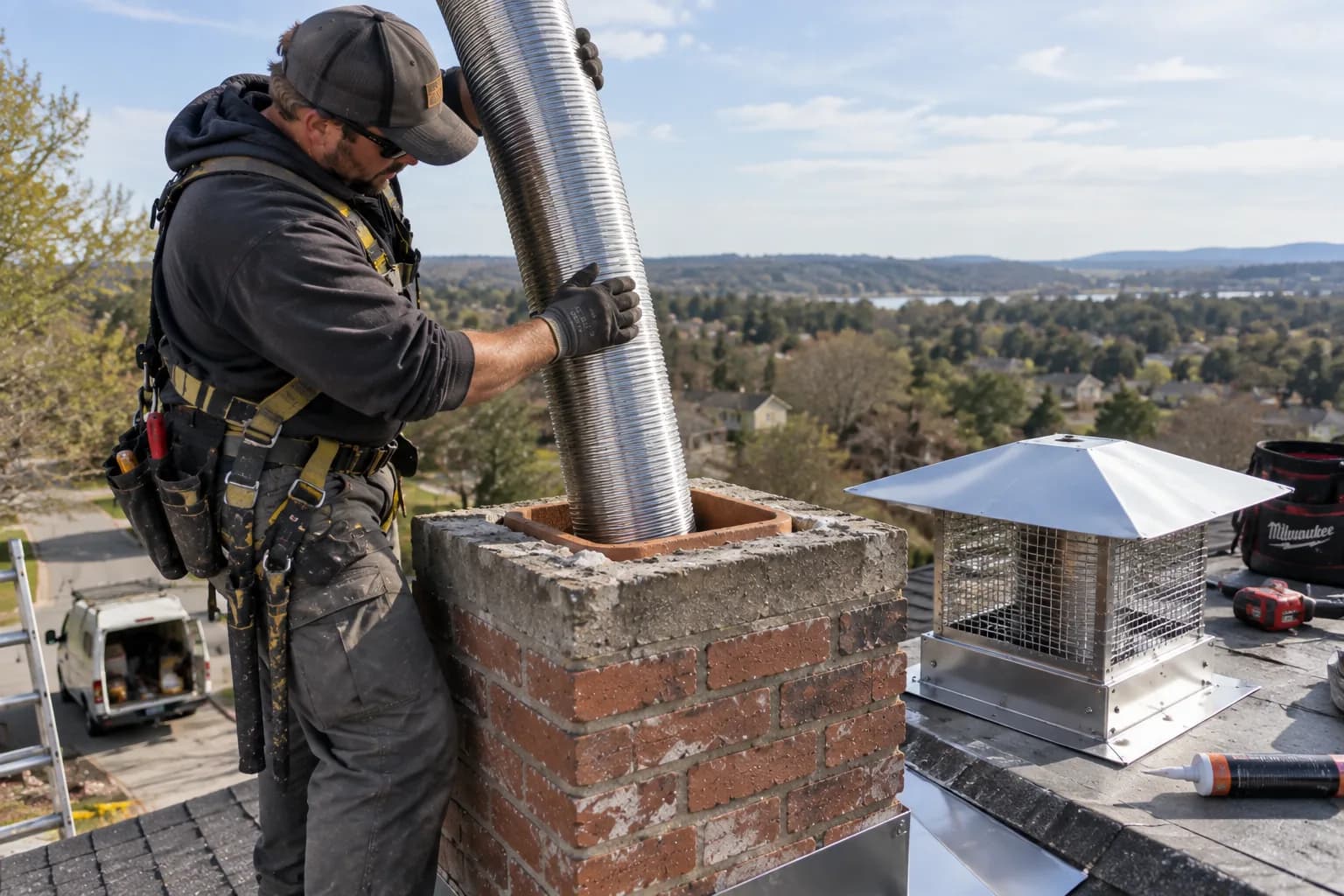
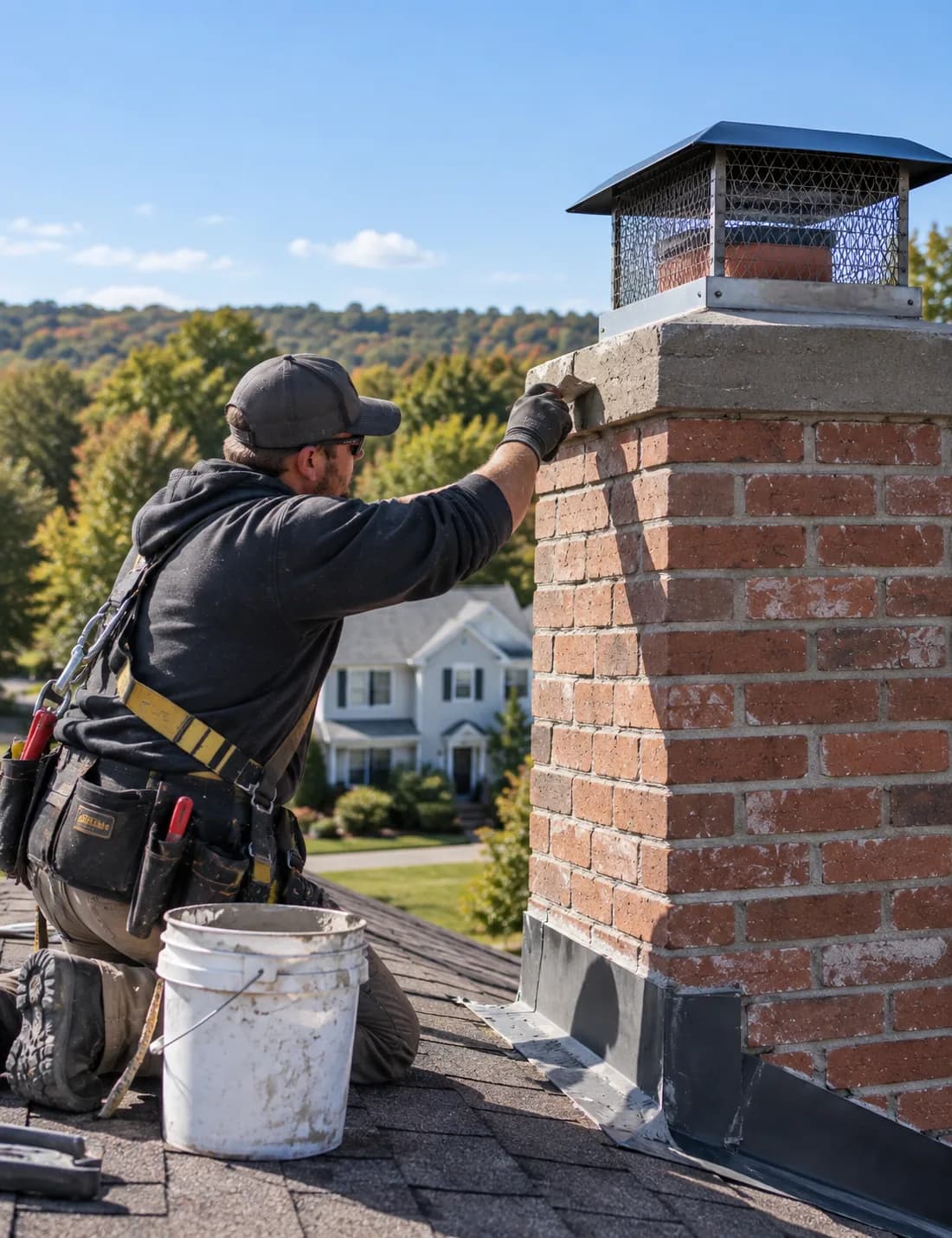
Fitting a cap is measuring the flue opening and the crown, choosing a cap that fits the opening properly and stands clear enough not to restrict the draft, and fixing it so wind cannot take it. Multi-flue stacks can take individual caps or one full-crown cover, and which suits depends on the layout.
Repair and replacement are one decision in practice. Caps are not complicated objects, and a cap whose mesh has corroded through is usually replaced rather than patched — the fixing is the part worth checking, because a cap that blew off once will do it again if the same fixing is reused.
It is nearly always worth doing at the same time as any other work at the top of the stack. Crown repair and cap fitting are the same access, and access is the part that costs.
Animal Screens and Spark Arrestors
Both of these are the mesh on a standard cap. An animal screen keeps birds, squirrels and raccoons out of the flue; a spark arrestor stops embers leaving it. Same component, two functions, two names.
Where a chimney has no cap and an animal has already got in, the order matters: the flue has to be cleared and checked before it is capped, because capping a flue with a nest in it simply seals the problem inside. Live animals in a chimney are a separate matter, and one with its own legal position in Connecticut — we handle the chimney side of it and are straightforward about where that line sits.
Mesh size is the detail that gets overlooked. Too coarse and it stops nothing; too fine and it clogs with creosote and restricts the draft, which causes the problem it was meant to prevent.
Frequently Asked Questions
Is a chimney cap worth fitting?
An open flue takes in rain, leaves and animals, and water is the main thing that degrades a chimney from the inside. A cap is one of the least involved ways to reduce that, so if yours is missing or corroded it is usually worth addressing while someone is at the top of the stack anyway.
What is the difference between the cap and the crown?
The crown is the sloped masonry or concrete slab across the top of the stack, which sheds water away from the brickwork. The cap is the cover over the flue opening itself. They fail in different ways and are different repairs.
Do I need a separate spark arrestor?
On nearly every residential chimney, no — the mesh on a standard cap is the spark arrestor. They are different names for the same component doing two of its jobs.
Will a cap affect the draft?
A correctly sized cap standing clear of the flue opening should not. One that sits too low, or has mesh fine enough to clog with creosote, will — which is why sizing and mesh choice matter more than they look.
The stack has several flues. What then?
Either individual caps on each flue or a single cover across the whole crown. Which suits depends on the layout, the spacing and the condition of the crown underneath.
Related Work at the Top of the Stack
Chimney Crown Repair
The slab beneath the cap, and the same access.
Chimney Leak Repair
When water is getting in somewhere other than the flue opening.
Animal or Bird in the Chimney
What to do first, before the flue is capped.
Chimney Cleaning
Clearing a flue before it is capped, so nothing is sealed in.
Blocked Chimney
The problem an uncapped flue most often produces.
Chimney Cap Installation by Town
Towns with their own chimney cap installation page. Service is available in all 169 Connecticut municipalities, with or without a page.
- Stamford
- Bridgeport
- New Haven
- Waterbury
- Norwalk
- Danbury
- New Britain
- West Hartford
- Greenwich
- Fairfield
- Milford
- Stratford
- Hamden
- Bristol
- Meriden
- Manchester
- West Haven
- Wallingford
- Southington
- Trumbull
- Glastonbury
- East Hartford
- Torrington
Request a Free Estimate
Need a Chimney Cap?
Tell us whether there is a cap there now, how many flues the stack has, and what is happening — rain in the firebox, debris, or animals. That shapes what is needed.
- Tell us the symptom, not the service
- No quote before someone has looked
- No obligation, no pressure
Ask About a Chimney Cap
A few details is all we need to get started.