
Connecticut
Chimney Restoration in Connecticut
Chimney restoration across Connecticut — bringing an original stack back to condition rather than replacing it. Request a free estimate.
Restoration Rather Than Rebuilding
Connecticut has some of the oldest housing stock in the country, and a proportion of its chimneys are original to houses built well before modern materials existed. On those, a rebuild is not simply expensive — it removes something that cannot be put back.
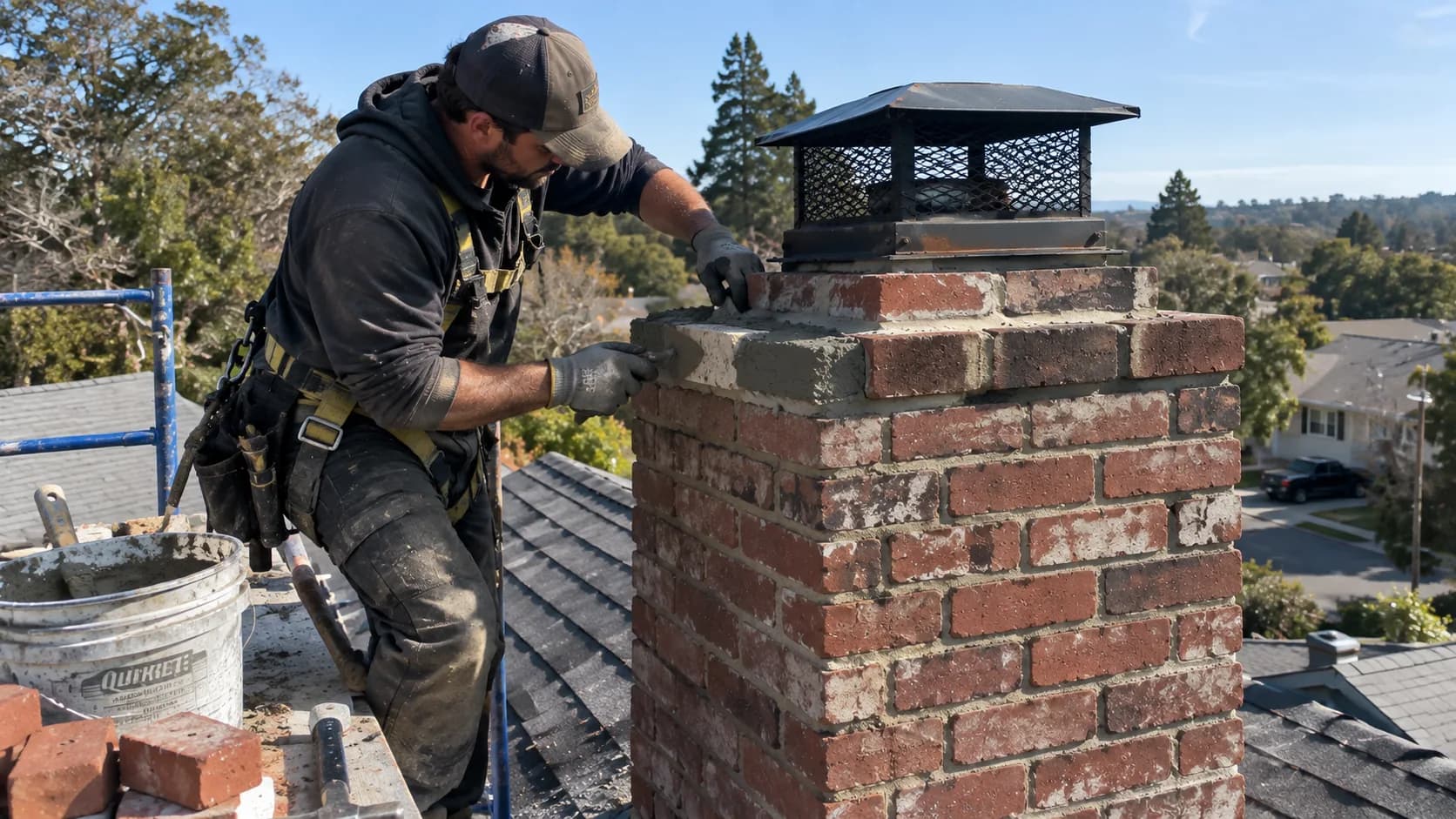
Restoration is the alternative: repairing and stabilising the existing masonry rather than replacing it. In practice that means careful repointing in a matched lime-based mortar, replacing only the brick that has genuinely failed, rebuilding the crown in a form appropriate to the chimney, and dealing with water entry so the deterioration stops.
It is not always available. A stack that has lost structural integrity has to be rebuilt, and saying otherwise would be dishonest. But the number of period chimneys rebuilt that could have been restored is not small.
What Restoration Work Requires
Matched materials, first and last. Lime-based mortar on a lime-built stack, because hard cement in soft old joints destroys the brick. Brick matched in size, color and density where any has to be replaced. A crown formed the way the original was rather than a modern slab dropped on top.
Then water management, because water is what caused the deterioration in the first place. That usually means the crown, the cap and a breathable masonry treatment — breathable specifically, because a sealed period stack traps moisture inside itself and accelerates the damage it was meant to prevent.
And a realistic assessment of what is achievable. Restoration stabilises and repairs; it does not make a two-hundred-year-old chimney new. What it can do is stop the sequence of deterioration and leave the stack sound and in service.
Frequently Asked Questions
What is the difference between restoration and a rebuild?
A rebuild replaces the masonry; restoration repairs and stabilises what is there. On period property restoration keeps the original fabric, which matters both for the building and, often, for what the house is.
Why does the mortar have to be lime-based?
Because the brick is soft. Lime mortar is weaker than the brick around it and takes the weather damage in its place, which is exactly what it is for. Hard modern cement reverses that, and the brick face spalls off instead.
Can a restored chimney still be used?
That depends on the flue rather than the masonry outside it. Restoring the stack and assessing the liner are two separate questions, and a chimney can be structurally sound and still need liner work before it vents anything.
The house is in a historic district. Does that change things?
It may change what is permitted and what materials are expected, and local requirements vary by town. It is worth establishing before work is specified rather than after, and we will ask about it.
Is restoration more expensive than rebuilding?
It can be, because matched materials and careful work take longer than replacement. Whether it is worth it is a judgement about the building rather than about the chimney alone, and it is a decision that should be yours with the facts in front of you.
Related Work on Period Masonry
Chimney Tuckpointing
Repointing in a matched mix — the core of restoration work.
Chimney Masonry Repair
Brick replacement where individual units have failed.
Chimney Crown Repair
Forming a crown that sheds water properly.
Chimney Waterproofing
Breathable treatment — the only kind safe on period masonry.
Chimney Rebuild
Where the stack has lost structural integrity and restoration is not available.
Fireplace Restoration
The same question at the other end of the chimney.
Request a Free Estimate
Restoring an Original Chimney?
Tell us roughly when the house was built and what condition the stack is in. Period masonry needs a different conversation from modern brickwork.
- Tell us the symptom, not the service
- No quote before someone has looked
- No obligation, no pressure
Ask About Chimney Restoration
A few details is all we need to get started.