Connecticut
Chimney Masonry Repair in Connecticut
Chimney masonry repair across Connecticut — repointing, brick replacement and rebuilding courses on the stack. Request a free estimate.
What Masonry Repair Addresses
Brick and mortar do not fail together. Mortar is deliberately the weaker of the two — it is meant to wear and be replaced rather than let the brick take the damage — so masonry repair nearly always begins as mortar work.
The mechanism in Connecticut is freeze-thaw. Water gets into an open joint or into the face of a brick, freezes, expands by roughly a tenth of its volume, and pushes the material apart. Then it thaws and the process repeats. A stack goes through that cycle dozens of times a winter, and the damage is cumulative.
What you see from the ground is the end of that sequence: joints raked back, brick faces flaking away in sheets, and in bad cases whole bricks that have lost their outer face entirely. The repair is to cut out and replace what has failed — the joints by repointing, the brick faces by cutting out and replacing individual bricks.
What Masonry Damage Looks Like
All of these are visible from the ground with a decent look, and most are visible from a photograph.
Joints raked back or missing mortar
The first stage and the cheapest to address. Repointing at this point avoids everything below.
Brick faces flaking or popping off
Spalling. The brick has absorbed water and the face has come away. It does not grow back.
Mortar you can scrape out with a key
A useful field test: sound mortar resists, failed mortar crumbles.
Stepped cracks following the joints
Movement, which needs a different assessment from ordinary weathering.
White powdery bloom on the brick
Efflorescence — salts brought out of the masonry by water moving through it.
Brick or mortar debris on the roof
Material is coming off the stack, usually from the most exposed top courses.
Repointing and Brick Replacement
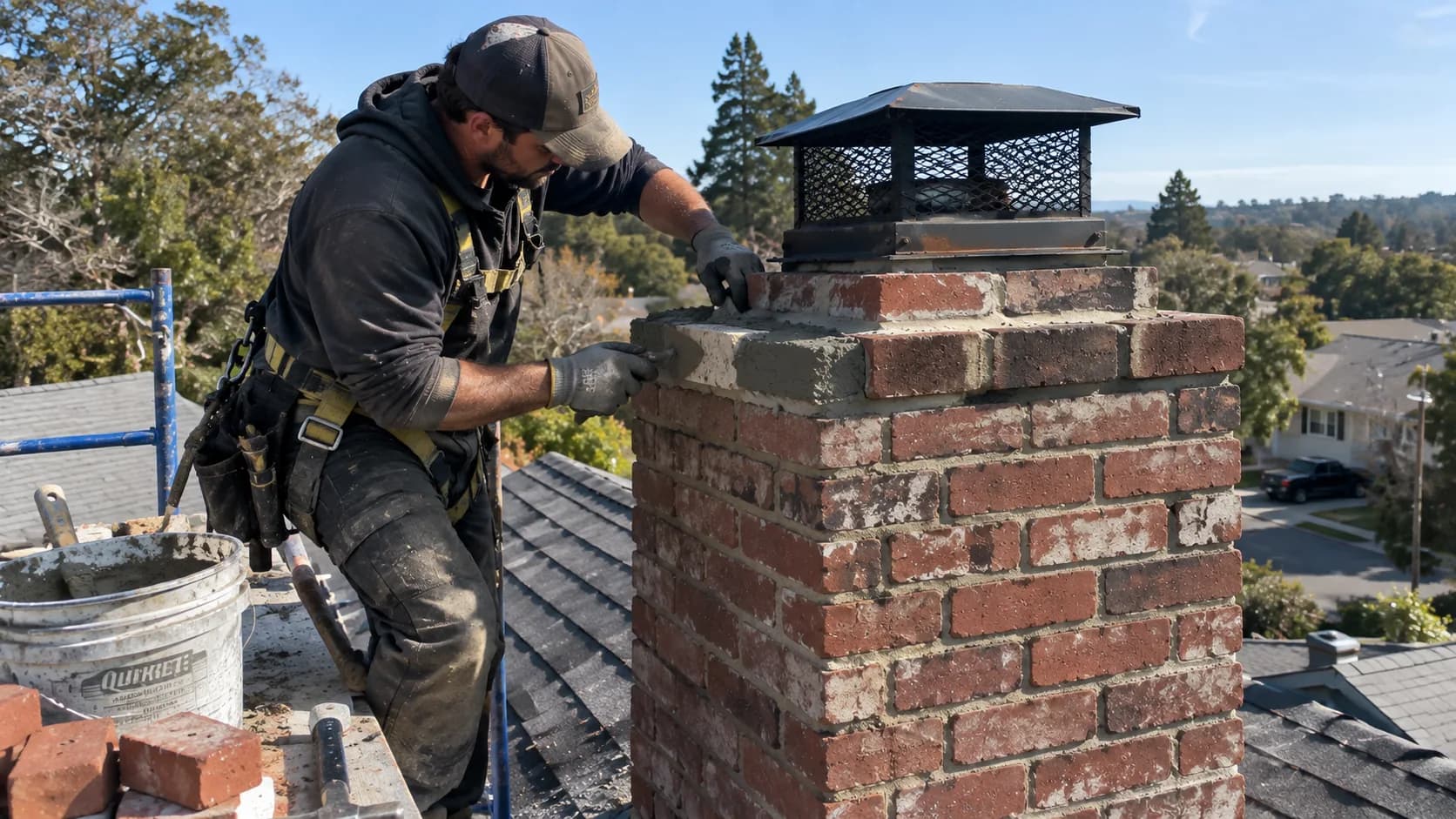
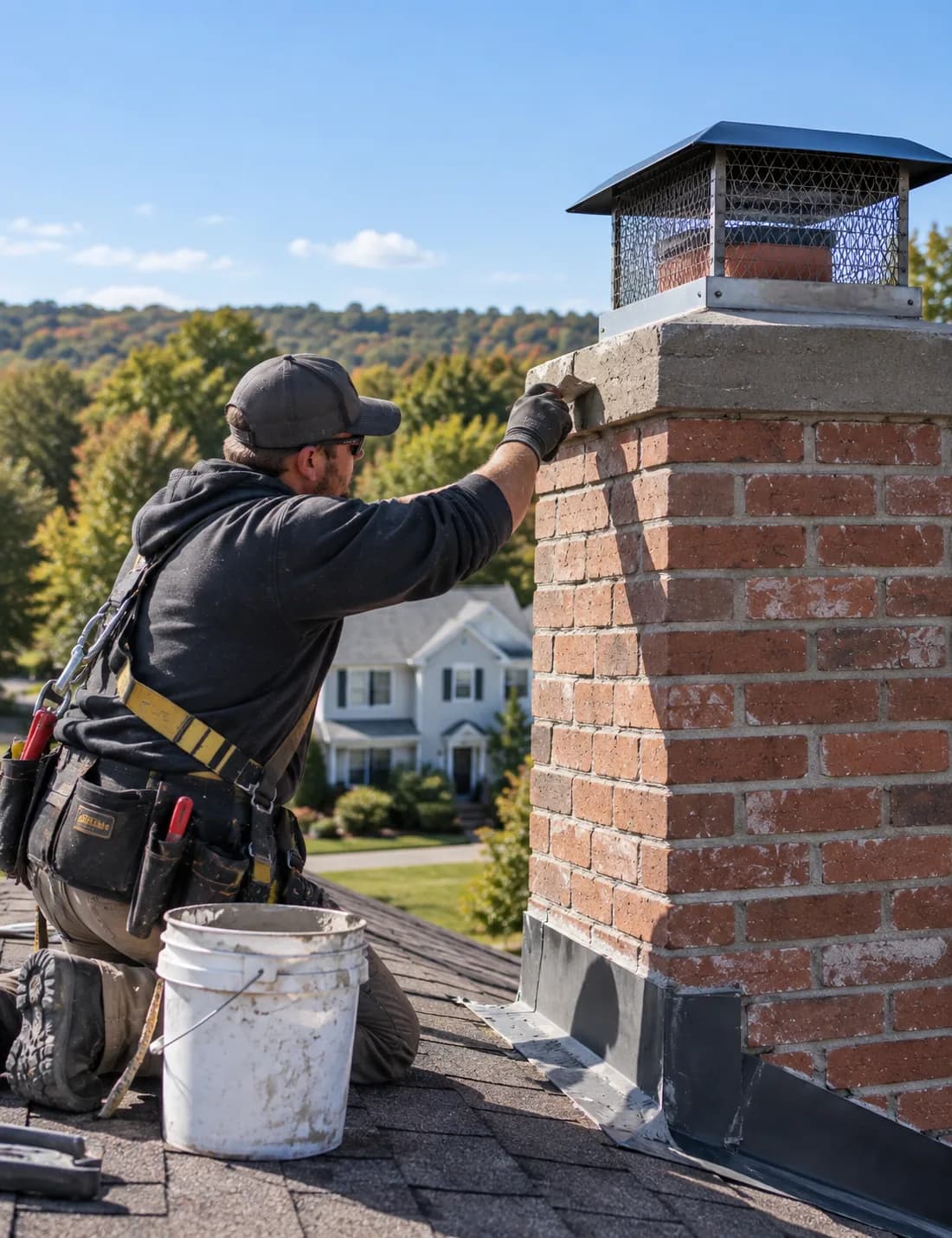
Repointing means cutting the failed mortar out of the joints to a sufficient depth and packing in new mortar. Depth matters — a surface smear over old mortar looks right for a season and then falls out — and so does the mix.
Matching the mortar is the part that gets overlooked. Older Connecticut chimneys were built with soft, lime-rich mortar, and putting a hard modern cement mortar into those joints does real damage: the new mortar is stronger than the brick, so the next freeze-thaw cycle takes the face off the brick rather than the mortar. On older stacks the mix should be matched to what is there.
Spalled brick is cut out individually and replaced, which is slower than it sounds because the replacement has to match in size, color and density. Where the top courses have gone across the board, taking the stack down to a sound course and rebuilding upward is often quicker and better than replacing brick by brick.
Frequently Asked Questions
Is brick repair the same as masonry repair?
Yes — they are two names for the same work, which is why this is one page rather than two. Masonry repair covers the brick, the mortar and the joints between them.
Why is the mortar crumbling?
Freeze-thaw, in almost every case. Water gets into the joint, freezes, expands and pushes it apart, then thaws and repeats. Connecticut winters put a stack through that cycle repeatedly, and mortar is designed to take that damage in preference to the brick.
Does the whole chimney need repointing?
Rarely. Damage concentrates in the most exposed places — the top courses, the weather side, and anywhere water collects — so partial repointing is the normal answer. A stack that genuinely needs it all over is usually a rebuild conversation.
Does it matter what mortar is used?
On an older chimney it matters a great deal. Modern cement mortar is harder than old soft brick, so when it freezes the brick face gives way instead of the joint. Matching the mix to the original is the difference between a repair and accelerated damage.
Will spalling spread if we leave it?
Yes. Once a brick has lost its fired outer face, the soft interior absorbs water far more readily, so the damage accelerates rather than stabilising. Spalled brick is the argument for not waiting another winter.
Can masonry work be done in cold weather?
Not well. Mortar needs temperatures above freezing to cure properly, so repointing and brick replacement are warm-season jobs in Connecticut. If a stack needs stabilising before then, that is a different and more limited conversation.
Related Masonry and Structural Work
Chimney Tuckpointing
The mortar-joint half of masonry repair, in detail.
Chimney Crown Repair
The slab at the top, which usually fails first.
Chimney Rebuild
When the deterioration has gone past repair.
Chimney Waterproofing
Breathable treatment to slow absorption after repointing.
Spalling Chimney Brick
What spalling is and why it accelerates.
Cracked Chimney
Which cracks are ordinary weathering and which are structural.
Crumbling Chimney Mortar
The diagnostic page for failing joints.
Chimney Masonry Repair by Town
Chimney Masonry Repair has its own page in 32 Connecticut towns. These are the largest; every other town is covered too and listed on the service areas page.
- Stamford
- Bridgeport
- New Haven
- Hartford
- Waterbury
- Norwalk
- Danbury
- New Britain
- West Hartford
- Greenwich
- Fairfield
- Milford
- Stratford
- Hamden
- Bristol
- Meriden
- Manchester
- West Haven
- Cheshire
- Wallingford
- Southington
- Trumbull
- Glastonbury
- East Hartford
- Enfield
- Shelton
- Torrington
- North Haven
Request a Free Estimate
Chimney Masonry Problem?
A photograph from the ground tells us a surprising amount — joints, brick faces and the top courses are usually visible. Send one with the address and we’ll follow up.
- Tell us the symptom, not the service
- No quote before someone has looked
- No obligation, no pressure
Ask About Masonry Repair
A few details is all we need to get started.