
Connecticut
Chimney Tuckpointing in Connecticut
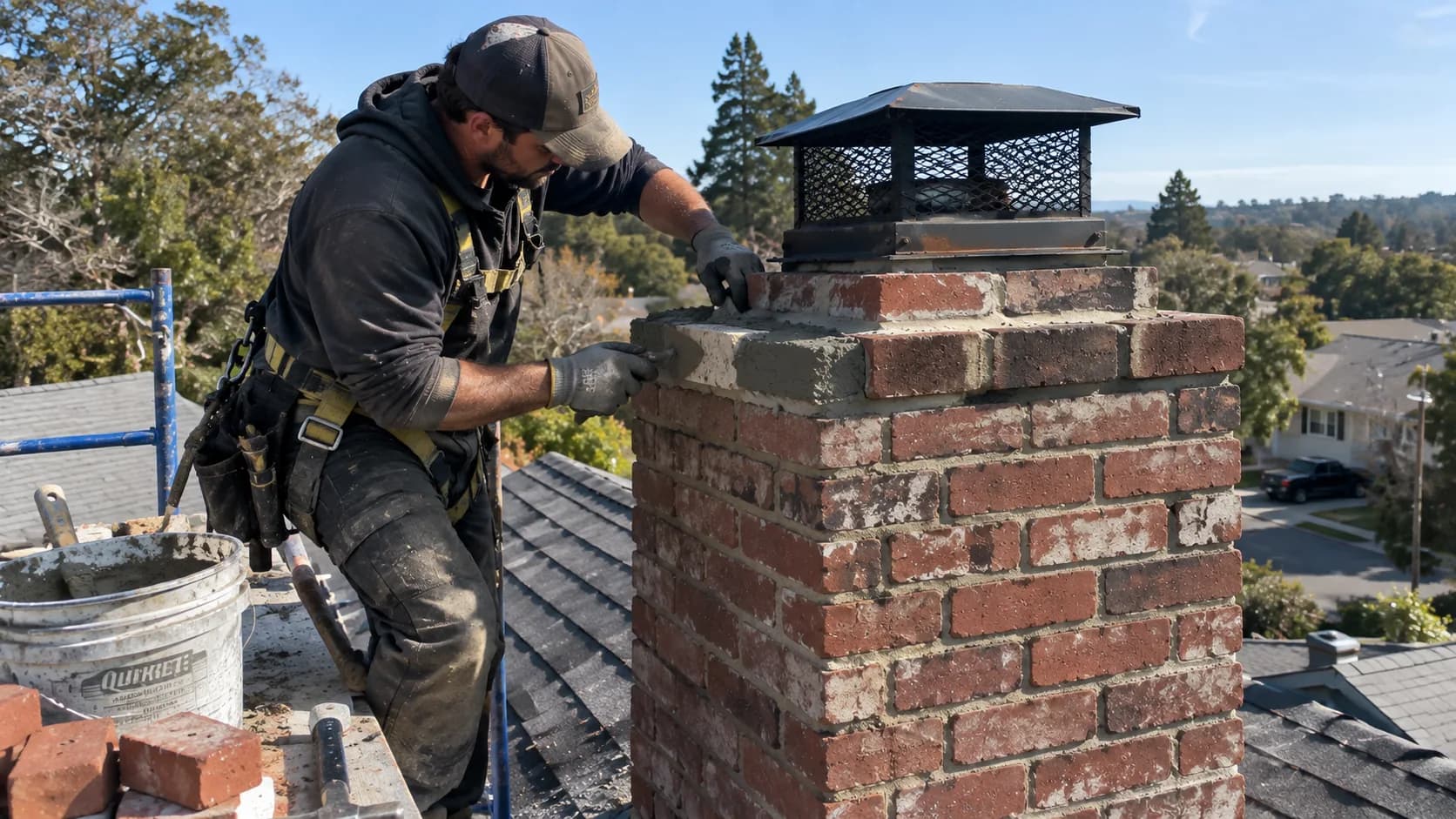
Chimney tuckpointing across Connecticut — cutting out failed mortar joints and packing in new, matched mortar. Request a free estimate.
Tuckpointing, Repointing, Mortar Repair
Three names, one job. Regional habit decides which one people use, and there is no practical difference between them when a chimney is being discussed — so this is one page rather than three near-identical ones.
The work is cutting the failed mortar out of the joints and packing in new. It exists because mortar is the sacrificial component in masonry: softer than the brick by design, so that weather damage happens to the joint rather than to the brick face. That design only works if the joints are eventually replaced.
Done at the right time, tuckpointing is the repair that prevents every more expensive one on the list. Left too long, the brick starts taking the damage instead, and brick replacement is considerably more work than mortar.
What Doing It Properly Requires
Depth first. The failed mortar has to be cut out to roughly two to three times the joint width, not scraped at the surface. A skim of new mortar over old, failed mortar looks correct for a season and then falls out in sheets, and it is the most common shortcut in this trade.
Then the mix. Mortar should be no harder than the masonry it sits in. Older Connecticut chimneys were laid in soft, lime-rich mortar, and filling those joints with hard modern cement makes the joint stronger than the brick — so the next freeze-thaw cycle takes the brick face off instead. Matching the original is the whole craft of it.
Then the finish. The joint is packed in layers rather than filled in one go, and tooled to shed water rather than hold it. A joint finished proud or flat collects water on its upper edge, which is exactly what the work was meant to stop.
A stack where the joints are failing across the whole surface, rather than in the exposed courses, is usually a rebuild conversation rather than a repointing one.
Frequently Asked Questions
What is the difference between tuckpointing and repointing?
In practice, nothing — the terms are used interchangeably for replacing failed mortar in joints. We treat them as one service rather than splitting them into two offerings that would only make the choice harder.
How do I know the joints have actually failed?
A key or a screwdriver is the usual field test: sound mortar resists, failed mortar crumbles and comes out. Visually, joints that have raked back noticeably behind the brick face, or mortar dust at the base of the stack, are the signs.
Can I repoint a chimney myself?
The hard parts are not the ones that look hard. Cutting out to sufficient depth without damaging brick, matching an old mortar mix, and working safely at height are each a real problem, and a surface skim over failed mortar is worse than leaving it.
How long does repointing last?
Done to depth in a matched mix on a sound stack, it is a long-term repair rather than a patch — it is the original joint being renewed. What shortens it is insufficient depth, the wrong mix, or continuing water entry from a failed crown above.
Should the crown be done at the same time?
Very often, because access to the top of the stack is the expensive part and a cracked crown above freshly repointed joints will keep feeding water into them. Doing both while the access is up is usually the sensible order.
Related Masonry Work
Chimney Masonry Repair
The wider page: brick as well as mortar.
Chimney Crown Repair
Usually worth doing while the access is already at the top.
Chimney Waterproofing
Breathable treatment to slow absorption once the joints are sound.
Crumbling Chimney Mortar
The symptom page — what failing joints look like and why.
Chimney Rebuild
When joints have failed across the whole stack rather than the exposed courses.
Request a Free Estimate
Mortar Joints Failing?
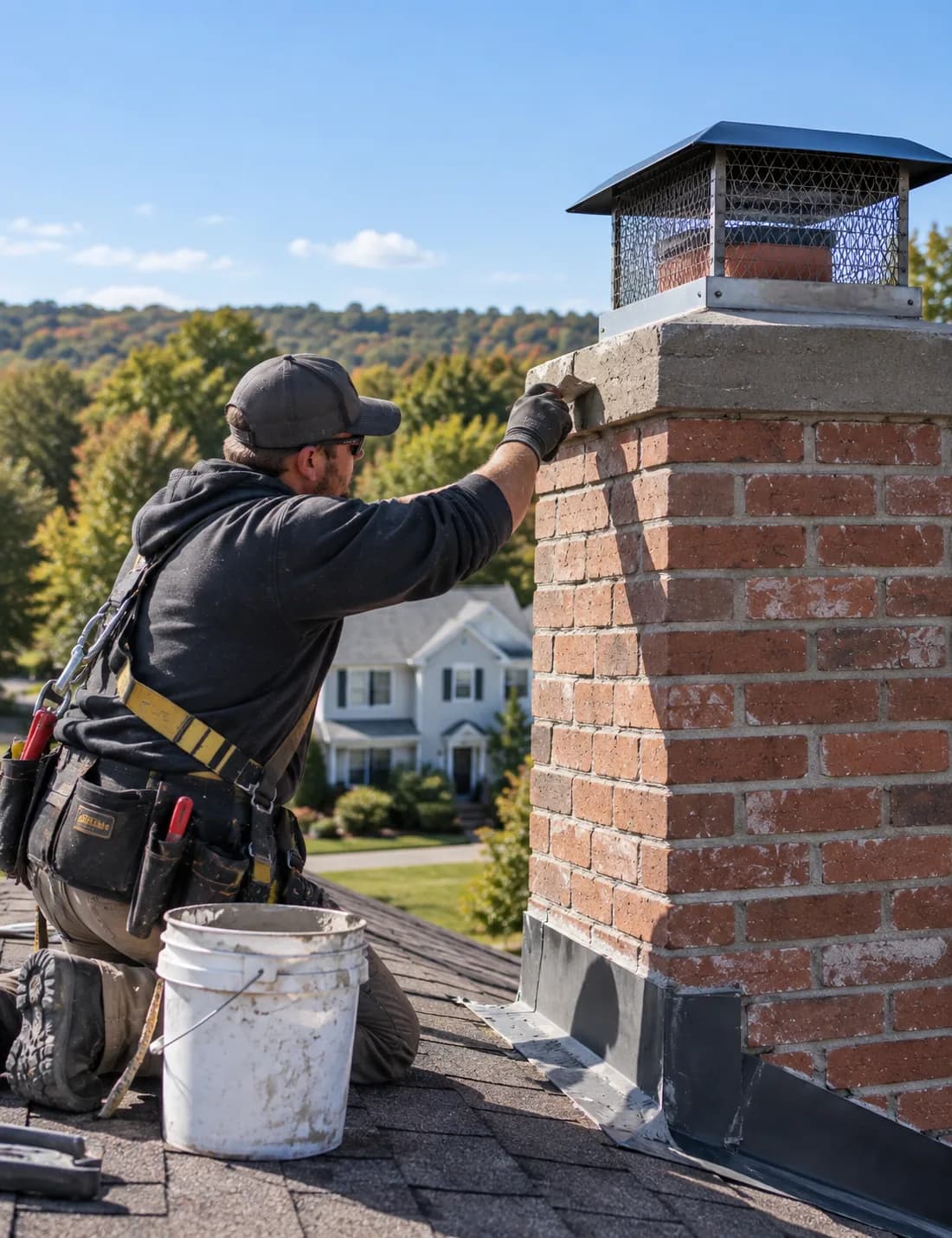
Send a photograph of the stack from the ground and the address. Joint condition is usually readable from one, and it tells us whether this is repointing or something larger.
- Tell us the symptom, not the service
- No quote before someone has looked
- No obligation, no pressure
Ask About Repointing
A few details is all we need to get started.